.

Showing posts with label ΚΩΝΣΤΑΝΤΙΝΟΣ Ο ΜΕΓΑΣ. Show all posts

Saturday, December 14, 2013

Death & resurrection
in early Christianity /

Θάνατος & ανάσταση
στις απαρχές του Χριστιανισμού


Early Christianity, in contrast to a few Greek and Alexandrian intellectuals, does not emphasise the earthly life of Jesus. Except among the exalted who drew inspiration from martyrdom, it dwells on his sufferings even less. The reliefs on sarcophagi say little about his human trials. They were influenced by pagan thought, and in times of trouble they wanted to stress not Christ's weakness but his power to save. It is only fairly late that Christ begins to appear as sufferer rather than as divine Teacher and Wonder-Worker; and even then this is shown as a triumph in disguise, without humiliation. The Crucifixion is rarely depicted before the fourth century. As to Constantine's alleged vision of the cross in the sky, followed by his employment of the cruciform labarum-monogram XP ( = Christos), the cross meant magic more than anything else to him, and in any case it stood not so much for the Passion as for the Resurrection -a new era and a new stage in the divine plan. Those wishing to see Jesus as god rather than man could rely on the Gospel according to St John. For this, despite its Hellenism, had concentrated in mystical and allegorical fashion on the divine nature of Jesus, seeing him not as a man but as a personified idea.

The wall-paintings in the catacombs of Rome and elsewhere are strongly influenced by this Gospel, and again have little to say about the humanity of Jesus. As among pagans, burial and not cremation was the custom, in order to permit the Resurrection of the body. Early Christians had at first preferred to bury their dead in open-air cemeteries above ground, but from c. 200, when space grew short and persecution increasingly threatened, they buried them instead in these underground corridors and cells. At Rome such catacombs evolved from subterranean graves of the Jews and other western and eastern traditions. The dark, soft, volcanic rock, strong but easily cut, was hollowed out first into a simple Greek cross or grid of the Catacomb of St Calixtus-to whom pope St Zephyrinus (d. c. 217) entrusted the administration of  'the cemetery' - and then into miles of several-storeyed mazes, containing between half and three-quarters of a million tombs. During the persecutions, some catacombs may have provided temporary places of refuge, and after Christianity became official, although burials continued until the end of the fourth century, they were turned into centres of pilgrimage.

The catacombs are lined with religious paintings, which reflect all the tendencies of the time, ranging from the artistic traditions of Rome to those of Alexandria and Mesopotamia, and from natural classical style to impressionistic or illusionistic baroque on the one hand and the simple severity of popular art on the other. This is a dogmatic narrative art, owing debts to the crowded reliefs of Roman tradition, and it uses much symbolism and shorthand, not from any desire for secrecy (the intention was to instruct rather than conceal) but because supernatural truth defies analysis. The paintings seem to reflect cycles of instruction partly derived from Jewish sources; there are echoes of prayers from the liturgy and from writings attributed to the great saints, and reflections of Christian poems and paraphrases of the Resurrection story.

The artists of the catacombs reveal an almost complete lack of emphasis on the humanity and suffering of Jesus. What they stress instead is his power as a divine Saviour. For the most frequently represented scene from his life is the Raising of Lazarus of Bethany from the Dead, of which the only account is in the Fourth Gospel. Already a good many years ago no less than fifty-three portrayals of this theme, accompanied by a gesture of benediction found also on the imperial coinage, were noted in the catacombs of Rome. For what most Christians really wanted from their faith was that they, like Lazarus, should be saved when the time for their Resurrection comes. The Raising of Lazarus meant the Resurrection of themselves. The doctrine of a general Resurrection and bodily survival or ascension of the dead is present in Ignatius and again in the oldest versions of the Creed, of late second-century date. For Christianity satisfied more specifically and invitingly than any other religion the almost universal craving for escape and salvation in the next world from the evils of this. Man, says Arnobius. has received the gift of immortality unknown before -that is the decisive fact, and the relief from a dreadful fear. His pupil Lactantius declares that he himself became Christian because conversion guaranteed him immortality.


Saturday, February 2, 2013

Two questions
made by P. Yfantis
on the relation of the Church
with the political entities
of this world /

Δύο ζητήματα
που θέτει ο Π. Υφαντής
όσον αφορά τη σχέση της Εκκλησίας
με τις πολιτικές οντότητες
αυτού του κόσμου


Nonostante ciò, tanto gli ispiratori dell’immagine storiografica, agiografica e innografica di Costantino, quanto la maggior parte dei pensatori della comunità credente lasciano ancora insoluti due interrogativi fondamentali, connessi, rispettivamente, al potere regale santificato e alla sostanza spirituale del Cristianesimo istituzionalizzato: Primo, è possibile un potere politico, indipendentemente dalle intenzioni buone, dalla fede o addirittura dalla santità dei suoi portatori, di servire la Chiesa di Cristo senza concorrere o usurpare la Sua dominio? E, secondo, è possibile la stessa Chiesa collaborare o persino identificarsi con una entità mondana e, anzi, politica, imitandone i meccanismi di padronanza di autoconservazione e di castigo contro i discordanti senza offuscare il cristallo del modo di vivere evangelico?

* Panaghiotis Yfantis / Παναγιώτης Υφαντής,

"Costantino il Grande
tra storia e santitàmore
"
[Constantine the Great
between history and holiness
/
Ο Μέγας Κωνσταντίνος
ανάμεσα στην Ιστορία και στην αγιότητα
]
[Italian/Ιταλικά, PDF]


Monday, October 22, 2012

A. M. Jones
on emperor Constantine's conversion /

Ο A. M. Jones
περί της μεταστροφής
του αυτοκράτορα Κωνσταντίνου


Ο προσηλυτισμός του Κωνσταντίνου μπορούμε να πούμε ότι από μια άποψη υπήρξε θρησκευτική εμπειρία αφού, μολονότι το κυριότερο κίνητρό του ήταν η κατάκτηση της κοσμικής εξουσίας, βασιζόταν για να επιτύχει αυτό το σκοπό, όχι στην ανθρώπινη, αλλά στη θεία βοήθεια. Όμως δεν ήταν εμπειρία πνευματική. Ο Κωνσταντίνος δεν ήξερε τίποτα ούτε ενδιαφερόταν καθόλου για τη μεταφυσική και ηθική διδασκαλία του Χριστιανισμού όταν έγινε πιστός του Θεού των Χριστιανών. Απλώς ήθελε να έχει συμπαραστάτη έναν ισχυρό Θεό, που, όπως πίστευε, αυθόρμητα τού είχε προσφέρει ένα σημείο. Ο προσηλυτισμός του αρχικά οφείλεται σ' ένα μετεωρολογικό φαινόμενο που έτυχε να δει σε μια κρίσιμη στιγμή της σταδιοδρομίας του.

* Arnold M. Jones,
Constantine and the conversion of Europe,
The English Universities Press, 1965,
p./σ. 102.


Ελληνική μετάφραση:
Αλέξανδρος Κοτζιάς,
Ο Κωνσταντίνος και ο εκχριστιανισμός της Ευρώπης,
εκδ. Κέδρος, 21983,
σσ. 97, 98.


Saturday, November 12, 2011

Emperor Constantine’s
very mixed blessings /

Η πολύ ανάμεικτη ευλογία
του αυτοκράτορα Κωνσταντίνου


Flavius Valerius Aurelius Constantinus—commonly known as Constantine I—was emperor of Rome from 306 until his death in 337. The Orthodox Catholic Church recognizes Constantine as a saint, the Roman Catholic Church does not. While this reflects substantial differences in evaluation, both Eastern and Western Catholics have long esteemed the emperor’s contributions to the security, prosperity, and power of Christianity, and writers in both traditions routinely refer to him as “Constantine the Great.”

However in later, more skeptical centuries, many historians echoed the attack on Constantine made by the emperor Julian the Apostate (331–363) during his quixotic and brief effort to reestablish paganism: Julian denounced Constantine as an insincere and self-indulgent tyrant. Thus generations of scholars rejected the authenticity of Constantine’s conversion, dismissed his support of Christianity as cynical, and condemned the unity he attempted to impose on the church. A leading critic was Jacob Burckhardt (1818–1897), who wrote: “Attempts have been made to penetrate the religious consciousness of Constantine and to construct a hypothetical picture of the changes in his religious convictions. Such efforts are futile. In a genius driven without surcease by ambition and lust for power there can be no question of religiosity; such a man is essentially unreligious, even if he pictures himself standing in the midst of a churchly community.... [A]ll of his energies, spiritual as well as physical, are devoted to the great goal of domination.” Then Burckhardt summed up Constantine as “a calculating politician who shrewdly employed all available physical resources and spiritual powers to the end of maintaining himself and his rule.”

This chapter opens by noting the reasons why recent historians have returned to a more complimentary view of Constantine’s conversion and his commitment to Christianity. It then assesses the benefits Constantine heaped upon the church—his massive church-building program all across the empire, as well as the privileges and power he conferred upon the clergy. Then it will be seen that Constantine’s imposition of doctrinal unity on Christianity created a tradition of crushing dissent. Remarkably, all the while he led religious intolerance within Christianity, he extolled tolerance of paganism. Finally, Constantine’s embrace of Christianity was interpreted in Persia to mean that all local Christians were potential traitors during wars with the empire, thus initiating decades of bloody persecution.


* Rodney Stark,
The Triumph of Christianity: How the Jesus Movement Became the World's Largest Religion
[Ο Θρίαμβος του Χριστιανισμού: Πώς το Κίνημα του Ιησού Έγινε η Μεγαλύτερη Θρησκεία του Κόσμου],
HarperOne 2011,
p./σ. 169, 170.


Wednesday, April 14, 2010

George Zabelka: Ο Χριστιανικός κόσμος & η ηθική του Πολέμου /
George Zabelka: The Christendom and the morality of War


«To fail to speak to the utter moral corruption of the mass destruction of civilians was to fail as a Christian and a priest as I see it. Hiroshima and Nagasaki happened in and to a world and a Christian Church that had asked for it – that had prepared the moral consciousness of humanity to do and to justify the unthinkable. I am sure there are Church documents around someplace bemoaning civilian deaths in modern war, and I am sure those in power in the church will drag them out to show that it was giving moral leadership during World War II to its membership.

Well, I was there, and I’ll tell you that the operational moral atmosphere in the Church in relation to mass bombing of enemy civilians was totally indifferent, silent, and corrupt at best – at worst it was religiously supportive of these activities by blessing those who did them.

I say all this not to pass judgment on others, for I do not know their souls then or now. I say all this as one who was part of the so-called Christian leadership of the time. So you see, that is why I am not going to the day of judgment looking for justice in this matter. Mercy is my salvation.


[...] For the first three centuries, the three centuries closest to Christ, the Church was a pacifist Church. With Constantine the church accepted the pagan Roman ethic of a just war and slowly began to involve its membership in mass slaughter, first for the state and later for the faith.

Catholics, Orthodox, and Protestants, whatever other differences they may have had on theological esoterica, all agreed that Jesus’ clear and unambiguous teaching on the rejection of violence and on love of enemies was not to be taken seriously. And so each of the major branches of Christianity by different theological methods modified our Lord’s teaching in these matters until all three were able to do what Jesus rejected, that is, take an eye for an eye, slaughter, maim, torture.


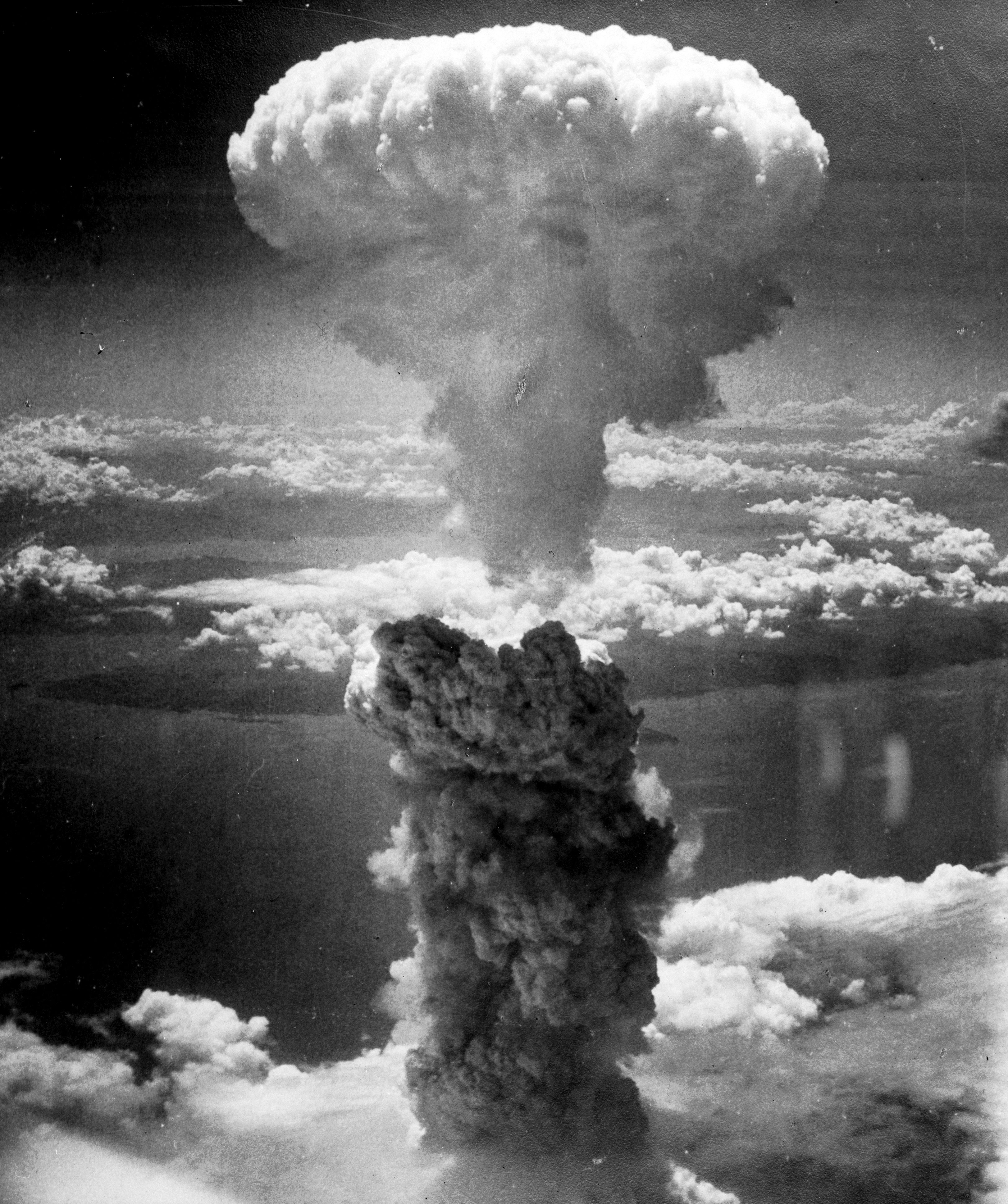
It seems a "sign" to me that seventeen hundred years of Christian terror and slaughter should arrive at August 9, 1945 when Catholics dropped the A-Bomb on top of the largest and first Catholic city in Japan. One would have thought that I, as a Catholic priest, would have spoken out against the atomic bombing of nuns. (Three orders of Catholic sisters were destroyed in Nagasaki that day.) One would have thought that I would have suggested that as a minimal standard of Catholic morality, Catholics shouldn’t bomb Catholic children. I didn’t.
I, like that Catholic pilot of the Nagasaki plane, was heir to a Christianity that had for seventeen hundred years engaged in revenge, murder, torture, the pursuit of power and prerogative and violence, all in the name of our Lord.

I walked through the ruins of Nagasaki right after the war and visited the place where once stood the Urakami Cathedral. I picked up a piece of a censer from the rubble. When I look at it today I pray God forgives us for how we have distorted Christ’s teaching and destroyed His world by the distortion of that teaching. I was the Catholic chaplain who was there when this grotesque process, which began with Constantine, reached its lowest point – so far».


[«Η αποτυχία να μιλήσω για την υπέρτατη ηθική διαφθορά του μαζικού αφανισμού πολιτών ήταν αποτυχία ως Χριστιανού και ως ιερέα κατά την άποψή μου. Η Χιροσίμα και το Ναγκασάκι ήταν εντός και προς έναν κόσμο και μια χριστιανική Εκκλησία η οποία το είχε επιζητήσει – η οποία είχε προετοιμάσει την ηθική συνειδητοποίηση της ανθρωπότητας ώστε να πράξει και να δικαιολογήσει το αδιανόητο. Είμαι βέβαιος ότι κυκλοφορούν εκκλησιαστικά έγγραφα που θρηνούν για το θάνατο πολιτών στους σύγχρονους πολέμους, και είμαι βέβαιος ότι οι έχοντες θέση εξουσίας στην εκκλησία θα τα ανασύρουν για να δείξουν ότι έδινε ηθική καθοδήγηση κατά τη διάρκεια του Β' Παγκοσμίου Πολέμου στα μέλη της.

Εγώ, όμως, ήμουν εκεί, και θα σας πω ότι η επιχειρησιακή ηθική ατμόσφαιρα στην Εκκλησία σε σχέση με το μαζικό βομβαρδισμό των πολιτών του εχθρού ήταν παντελώς αδιάφορη, σιωπηλή, και στην καλύτερη περίπτωση διεφθαρμένη
– στη χειρότερη περίπτωση υποστήριζε θρησκευτικά αυτές τις δραστηριότητες ευλογώντας αυτούς που τις έπρατταν.

Τα λέω όλα αυτά όχι για να μετακυλήσω την κριτική σε άλλους, διότι δεν γνωρίζω τις ψυχές τους τότε ή τώρα. Τα λέω όλα αυτά ως ένας από εκείνους που συμμετείχαν στη λεγόμενη χριστιανική ηγεσία της εποχής. Βλέπετε έτσι, ότι αυτός είναι ο λόγος που δεν πηγαίνω στην ημέρα της κρίσης αποβλέπωντας για δικαιοσύνη στο ζήτημα αυτό. Το έλεος είναι η σωτηρία μου.

[...] Κατά τους πρώτους τρεις αιώνες, τους τρεις αιώνες που ήταν πιο κοντά στον Χριστό, η Εκκλησία ήταν μια φιλειρηνική Εκκλησία. Με τον Κωνσταντίνο η εκκλησία αποδέχτηκε το παγανιστικό ρωμαϊκό ήθος του δίκαιου πολέμου και σιγά-σιγά άρχισαν τα μέλη της να αναμιγνύονται σε μαζικές σφαγές, αρχικά για το κράτος και αργότερα για την πίστη.

Καθολικοί, Ορθόδοξοι και Προτεστάντες, όποιες κι αν είναι οι διαφορές τους σε θεολογικά ζητήματα εσωτερικής φύσης, όλοι συμφώνησαν ότι δεν θα έπρεπε να ληφθεί υπόψη στα σοβαρά η ξεκάθαρη και αδιαμφισβήτητη διδασκαλία του Ιησού σχετικά με την απόρριψη της βίας και την αγάπη για τους εχθρούς. Και έτσι οι κύριοι κλάδοι του Χριστιανισμού μέσω διαφορετικών θεολογικών μεθόδων τροποποίησαν τη διδασκαλία του Κυρίου μας σε αυτά τα θέματα μέχρι και οι τρεις τους να μπορούν να κάνουν όσα απέρριψε ο Ιησούς, δηλαδή, να πράττουν το οφθαλμόν αντί οφθαλμού, να σφαγιάζουν, να ακρωτηριάζουν, να βασανίζουν.

Αποτελεί για εμένα "σημείο" ότι χίλια εφτακόσια χρόνια χριστιανικού τρόμου και σφαγών θα κατέληγαν στις 9 Αυγούστου 1945 στην ρίψη από Καθολικούς της ατομικής βόμβας πάνω από τη μεγαλύτερη και την πρώτη Καθολική πόλη της Ιαπωνίας. Κάποιος θα μπορούσε να σκεφτεί ότι εγώ, ως Καθολικός ιερέας, θα είχα καταδικάσει τον ατομικό βομβαρδισμό των μοναχών. (Τρία τάγματα Καθολικών γυναικών μοναχών αφανίστηκαν στο Ναγκασάκι εκείνη την ημέρα.)
Κάποιος θα μπορούσε να σκεφτεί ότι θα είχα προτείνει ως κατώτατο όριο Καθολικής ηθικής το να μην βομβαρδίζουν Καθολικοί τα Καθολικά παιδιά. Δεν το έκανα.

Εγώ, όπως εκείνος ο Καθολικός πιλότος στο αεροπλάνο στο Ναγκασάκι, ήμουν κληρονόμος ενός Χριστιανισμού ο οποίος για χίλια εφτακόσια χρόνια ενεπλάκη σε εκδίκηση, σε δολοφονία, σε βασανιστήρια, στην επιδίωξη της εξουσίας, των προνομίων και της βίας, όλα στο όνομα του Κυρίου μας.

Περπάτησα ανάμεσα στα ερείπια του Ναγκασάκι μετά τον πόλεμο και επισκέφτηκα το σημείο όπου κάποτε στεκόταν ο Καθεδρικός ναός του Ουρακάμι. Πήρα μέσα από τα ερείπια ένα κομάτι ενός θυμιατηρίου. Όταν το κοιτάζω σήμερα προσεύχομαι στον Θεό να μας συγχωρήσει για το βαθμό στον οποίο διαστρέψαμε τη διδασκαλία του Χριστού και καταστρέψαμε τον κόσμο Του διαστρέφοντας αυτή τη διδασκαλία. Ήμουν ο Καθολικός στρατιωτικός ιερέας ο οποίος βρισκόταν εκεί όταν αυτή η αλλόκοτη διαδικασία, η οποία ξεκίνησε με τον Κωνσταντίνο, έφτασε στο κατώτατό της σημείο
–ως τώρα».]


* George Zabelka,
«I was told It was Necessary»
[«Μου είπαν ότι Ήταν Αναγκαίο»],
Sojourners 9/8 1980, pp./σσ. 12-15.

Reproduced/Αναπαράχθηκε here/εδώ & here/εδώ.

In August of 1945 Rev. George B. Zabelka, a Catholic chaplain with the U.S. Army Air Force, was stationed on Tinian Island in the South Pacific. He was assigned to serve the Catholics of the 509th Composite Group. The 509th Composite Group was the Atomic Bomb Group. He served as a priest for those who dropped the atomic bombs on Hiroshima and Nagasaki. After 22 years as a military chaplain he retired as a Lieutenant Colonel

Τον Αύγουστο του 1945 ο Αιδ. Τζορτζ Μπ. Ζαμπέλκα, Καθολικός στρατιωτικός ιερέας της Στρατιωτικής Αεροπορίας των ΗΠΑ, υπηρετούσε στη Νήσο Τίνιαν στον Νότιο Ειρηνικό. Διορίστηκε για να λειτουργεί τους Καθολικούς της 509ης Μονάδας της Πολεμικής Αεροπορίας. Η 509η Μονάδα της Πολεμικής Αεροπορίας ήταν η Μονάδα της Ατομικής Βόμβας. Υπηρέτησε ως ιερέας εκείνων που έριξαν τις ατομικές βόμβες στη Χιροσίμα και το Ναγκασάκι.  Μετά από 22 χρόνια ως στρατιωτικός ιερέας συνταξιοδοτήθηκε ως Αντισυνταγματάρχης.

Ενδιαφέρουσα είναι η προσέγγιση του θέματος από τον
Richard B. Hays στο
The moral vision of the New Testament: community, cross, new creation : a contemporary introduction to New Testament ethics (Continuum International Publishing Group, 1997):

Saturday, March 13, 2010

Ο Κωνσταντίνος ο Μέγας & η θεϊκή εκλογή του /
Constantine the Great and his devine selection


«And now, with such a mass of impiety oppressing the human race, and the commonwealth in danger of being utterly destroyed, as if by the agency of some pestilential disease, and therefore needing powerful and effectual aid; what was the relief, and what the remedy which the Divinity devised for these evils? ... I myself, then, was the instrument whose services He chose,... Accordingly, beginning at the remote Britannic ocean, and the regions where, according to the law of nature, the sun sinks beneath the horizon, through the aid of divine power I banished and utterly removed every form of evil which prevailed, in the hope that the human race, enlightened through my instrumentality, might be recalled to a due observance of the holy laws of God».
Constantine the Great
Eusebius, De Vita Constantini, II, 28.

«Καθώς το ανθρώπινο γένος είχε διαποτισθεί με τόσο μεγάλη ασέβεια και το κράτος απειλούνταν με καταστροφή, ποια πρόνοια επενόησε ο Θεός; ... Εγώ ο ίδιος ήμουν το μέσον που Αυτός επέλεξε ... Έτσι, ξεκινώντας από το μακρινό Ωκεανό της Βρετανίας, από εκεί όπου ο ήλιος δύει κάτω από τον ορίζοντα, υπακούοντας στους νόμους της Φύσεως, απώθησα και διασκόρπισα με τη βοήθεια του Θεού όλες τις μορφές του κακού που δέσποζε τότε, με την ελπίδα ότι το γένος των ανθρώπων, έχοντας διαπαιδαγωγηθεί από εμένα, θα μπορούσε να επιστρέψει ξανά στη σωστή τήρηση του Θείου Νόμου».
Κωνσταντίνος ο Μέγας
Ευσέβιος, De Vita Constantini, II, 28.