.

Showing posts with label 4Q LXXLevb (4Q120). Show all posts

Monday, October 31, 2011

The so-called
Hebrew & Alexandrian Bible canons
being challenged
& the Greek speaking Jews of Palestine /

Οι επιλεγόμενοι
Ιουδαϊκός & Αλεξανδρινός βιβλικός κανόνας
εν αμφιβόλω
& οι ελληνόφωνοι Ιουδαίοι της Παλαιστίνης


4Q LXXLevb


The Alexandrian canon hypothesis in modern canonical studies was proposed by J. S. Semler (1771).24 Divorcing himself from the dogmatic Protestant position that the Old Testament had always been the books of the Hebrew canon, Semler proposed that Hellenistic Jews of Egypt had a different canon than those in Palestine. Alexandrian Jews and Jews of the Diaspora were a third party that accepted the books of the Apocrypha in their canon. Semler believed that these books were composed in Greek in Alexandria. Like Augustine, Semler believed that the Jewish translators of the Law into Greek were inspired, which gave authority to the enlarged Greek canon. His hypothesis came to be generally accepted in the nineteenth century (Sundberg 1964:7-40). Since Semler, scholarly research has produced no additional evidence supporting the Alexandrian canon hypothesis.

This consensus about the Hebrew and Alexandrian canons began to be challenged in 1957 with the presentation by this writer of a doctoral thesis to the Faculty of Harvard University with the title, The Old Testament of the Early Church.25 These were the days when the discoveries of the Dead Sea Scrolls were still fresh. I was attracted by the circumstance that scrolls and scroll fragments of books we now call Apocrypha and Pseudepigrapha as well as other, often previously unknown, non-sectarian religious writings were found among the Dead Sea Scrolls. Copies of the Hebrew canonical writings and sectarian writings of the apparently Essene (?)26 inhabitants of Qumran were also found. This appeared strikingly similar to the circumstance in early Christianity as observed above. The resultant thesis challenged the Old Testament canon consensus at two points: Was there really an Alexandrian canon? Was the Hebrew or Jewish canon in Palestine completed (as a de facto canon) before the first century C.E.?

Critique of the Alexandrian canon consisted chiefly in bringing attention to previous scholarly findings that completely undercut the foundations upon which the Alexandrian canon rested. But notice had not been taken as to the effect these had upon the Alexandrian canon hypothesis. The bases upon which the Alexandrian canon had been proposed had simply been forgotten.

Socio-political studies placed the venue for the composition of apocryphal writings in Palestine rather then in Alexandria (Smith 1900; Grant 1923 and 1924, Pfeiffer 1949:63; and Torrey 1945:108). Linguistic analysis of the extra-canonical Jewish literature came to show that most of that literature, rather than having been written in Greek in Alexandria, was actually written in Hebrew or Aramaic in Palestine (Sundberg 1964:62). A Hebrew text of Ben Sira was found in a Geniza in Cairo (Kahle 1960).

The Hellenistic element in Palestinian Judaism is now generally recognized, which was not the case three or four decades ago. S. Lieberman's Greek in Jewish Palestine (1942) and E. R. Goodenough's Jewish Symbols in the Greco-Roman Period (1953) were ground-breaking and not immediately generally accepted. Goodenough (1953:1.8-13) told us that Greek names are nearly as common as Hebrew and Aramaic names combined on first century C.E. Jewish tombs in Palestine and that names of Jews preserved on ossuaries from the period of the Maccabees to 135 C.E. are one third Greek (Goodenough 1953:1.111-132). One inscription from pre-70 C.E. Jerusalem, records the building and dedication of a synagogue "for the reading of the Law and for the teaching of the Commandments." The inscription is in Greek and the name of the builder is Greek. Goodenough (1953:1.8-13) believed that the Law was read in Greek in that synagogue. By the third century C.E. Greek was the predominant language for Jews in Palestine. Goodenough (1953:1.80)27 says that, ". . . Greek inscriptions in Palestinian synagogues show that the placing of Hellenized Judaism, as Alexandrian, over against Palestinian Judaism is unwarranted." Thus, it appears that a significant portion of the Palestinian Jewish population was bi-lingual: Aramaic (and Hebrew as a learned language) and Greek.

Lieberman (1942:15) points out the evidence for the use of Greek in the rabbinic materials and notes an "overwhelming number of Greek words" in the Talmudic literature. More impressive than direct reference to Jews using Greek is the inclusion of Greek words, phrases and proverbs in the sayings of the Jewish preachers (Lieberman 1942:30).28 Lieberman refutes the claim that these were embellishments by preachers to dazzle their ignorant hearers with high-sounding phrases. Rather, he argues, the preacher spoke to the people in their language and style and, thus, this Greek usage reflects the common understanding and usage of the time (Lieberman 1942:37-67).


* Albert C. Sundberg, Jr.,
"The Old Testament of the Early Church Revisited",
in Thomas J. Sienkewicz and James E. Betts (eds.),
Festschrift in Honor of Charles Speel, 
Monmouth College in Monmouth, Illinois, 1997.
[English/Αγγλικά, HTML]
*


Monday, August 23, 2010

The Hebrew Tetragrammaton & Divine Titles
transcripted or transcribed in Greek LXX
used at Greek magical papyri & amulets /

Το Τετραγράμματο & Θεϊκοί Τίτλοι στα Εβραϊκά
που μεταγράφηκαν ή μεταφέρθηκαν στα Ελληνικά
στη μετάφραση των Εβδομήκοντα
σε χρήση σε ελληνικούς μαγικούς πάπυρους & φυλαχτά

«Greek magical papyri often include various names of deities and demons, some of which are transcriptions of God's names as they appear in the Hebrew Bible, among them αδωναι (אדני, e.g. PGM I:305; sometimes written as αδωναιος). Other such names are: ελωαιος (אלוהים; PGM I:311; sometimes written as ελωαι [e.g. PGM IV:1577, VII:564], or ελωη, ελωυειν) and ιαω for YHWH (PGM VII:564). Ιαω occurs also in the Nag Hammadi library, and in 4QpapLXXLeviticus (e.g. Frgs. 20-21 = Lev 4:27). For a combination of such names, see the Greek magical papyrus (PGM XXXVI:42) that provides a "Charm to restrain anger and to secure favor and an excellent charm for gaining victory in the courts," where it says: "The names to be written are these: 'ΙΑΩ ΣΑΒΑΩΘ ΑΔΩΝΑΙ ΕΛΩΑΙ...'"

An interesting parallel to our amulet was found on a golden charm dated ca. 75-140 C.E. This amulet was discovered during the excavations of the house called Cefn Hendre, "located outside the southernmost corner of the Roman fort of Segontium." This amulet originated probably in a grave (although no details of its exact location are known). The text attests to "a Jewish liturgical formula written in Greek letters, and including a curious mixture of normal Greek phrases, some of which appear to have been marginal glosses inserted into the body of the text." In addition, there are some words squeezed in between the lines or at the right margin, as well as some punctuation between magic names. According to Kotansky, the Greek and Hebrew equivalent of lines 1-15 can be reconstructed as follows:

Ἀδωναῖε Ἐλωαῖε Σαβαωθ = אדני אלוהי צבאות "'The Lord, the God of Hosts" (cf. Hos 12:6).

ειε εσαρ ειε = אהיה אשד אהיה "Ehyeh-Asher-Ehyeh" (Exod 3:14).

σουρα αρβαρτ Ιαω = סו־ה עברת יהוה "turn aside, Ο wrath of [IAO]" (cf. Isaiah 9:18,13:13).

ελλιων ἁνωρα ἁγγιβωρ = עליון הנורא הגיבור "(the) Most High, the Awesome, the Mighty (God)" (cf. Deut 10:17).

βαιλλαλααμωθ = בעל לעלא למות "Lord over the Pestilence/Death."

βαρουχ αθθα ουβαρουζ οὑδηχα ἀεί ωλαμ λεωλαμ = ברוך אתה וברוך הורבה עולם לעולם "Blessed are You and blessed is Your splendor, (for) ever (and) ever."

The Jewish "liturgical formula" of this text includes the following: Ἀδωναῖε Ἐλωαιε Σαβαωθ. As noted by the editor, this combination, of which parts are known in other amulets, probably represents the Hebrew אדני אלוהי צבאות, "Lord, God of Hosts," as found e.g. in Hosea 12:6.»


«Οι ελληνικοί μαγικοί πάπυροι συχνά περιέχουν διάφορα ονόματα θεοτήτων και δαιμόνων, κάποια από τα οποία είναι μεταγραφές των ονομάτων του Θεού όπως εμφανίζονται στην Εβραϊκή Βίβλο, μεταξύ των οποίων το αδωναι (אדני, πχ. PGM I:305· σε κάποιες περιπτώσεις και αδωναιος). Άλλα τέτοια ονόματα είναι: ελωαιος (אלוהים; PGM I:311· σε κάποιες περιπτώσεις και ελωαι [e.g. PGM IV:1577, VII:564], ή ελωη, ελωυειν) και ιαω αντί του ΙΧΒΧ (PGM VII:564). Το Ιαώ εμφανίζεται επίσης στη βιβλιοθήκη του Ναγκ Χαμαντί και στον πάπυρο 4QpapLXXLeviticus (πχ. σπαράγμ. 20-21 = Λευ 4:27). Για συνδυασμό τέτοιων ονομάτων, βλέπε τον ελληνικό μαγικό πάπυρο (PGM XXXVI:42) που περιέχει ένα "φυλαχτό που απομακρύνει το θυμό και εξασφαλίζει έναντι καλοτυχία και ένα εξαιρετικό φυλαχτό για την εξασφάλιση νίκης στα δικαστήρια", όπου αναφέρεται: "Τα ονόματα που πρέπει να γραφτούν είναι τα εξής: 'ΙΑΩ ΣΑΒΑΩΘ ΑΔΩΝΑΙ ΕΛΩΑΙ...'"

Ένα ενδιαφέρον παράλληλο του εν λόγω φυλαχτού βρέθηκε σε ένα χρυσό φυλαχτό που χρονολογείται περ. 75-140 Κ.Χ. Αυτό το περίαπτο ανακαλύφθηκε κατά τη διάρκεια ανασκαφών στο σπίτι που ονομάζεται Κεφν Χεντρέ, "που βρίσκεται έξω από την πιο βόρεια γωνία του ρωμαϊκού φρουρίου του Σεγοντίου. Αυτό το φυλαχτό προήλθε κατά πάσα πιθανότητα από τάφο (αν και δεν είναι γνωστές οι λεπτομέρειες της ακριβούς τοποθεσίας). Το κείμενο μαρτυρεί ότι πρόκειται για "μια ιουδαϊκή λειτουργική στερεότυπη φράση γραμένη με ελληνικά γράμματα και η οποία περιέχει ένα παράξενο μίγμα κανονικών ελληνικών φράσεων, κάποιες από τις οποίες φαίνεται ότι ήταν περιθωριακές γλώσσες που εισάχθηκαν στο σώμα του κειμένου". Επιπρόσθετα, υπάρχουν κάποιες λέξεις που είναι στριμωγμένες ανάμεσα στους στίχους ή στο δεξιό περιθώριο, καθώς επίσης και σημεία στίξης μεταξύ των μαγικών ονομάτων. Σύμφωνα με τον Κοτάνσκι, τα ελληνικά και τα εβραϊκά αντίστοιχα των στίχων 1-15 μπορούν να ανασυντεθούν ως ακολούθως:

Ἀδωναῖε Ἐλωαῖε Σαβαωθ = אדני אלוהי צבאות "'Ο Κύριος, ο Θεός των Δυνάμεων" (παράβαλε Ωσ 12:6).

ειε εσαρ ειε = אהיה אשד אהיה "Εχγέχ-Ασέρ-Εχγέχ" (Εξ 3:14).

σουρα αρβαρτ Ιαω = סו־ה עברת יהוה "απομακρύνσου, θυμέ του Ιαώ" (παράβ. Ησ 9:18,13:13).

ελλιων ἁνωρα ἁγγιβωρ = עליון הנורא הגיבור "(ο) Ύψιστος, ο Μεγαλειώδης, ο Κραταιός (Θεός)" (παράβ. Δευ 10:17).

βαιλλαλααμωθ = בעל לעלא למות "Κύριος της Επιδημίας/του Θανάτου".

βαρουχ αθθα ουβαρουζ οὑδηχα ἀεί ωλαμ λεωλαμ = ברוך אתה וברוך הורבה עולם לעולם "Ευλογημένος είσαι Εσύ και ευλογημένη είναι η λαμπρότητά Σου, (για) πάντα (και για) πάντα".

Η ιουδαϊκή "στερεότυπη φράση" αυτού του κειμένου περιλαμβάνει τα ακόλουθα: Ἀδωναῖε Ἐλωαιε Σαβαωθ. Όπως σημειώνεται από τον εκδότη, αυτός ο συνδυασμός, μέρη του οποίου είναι γνωστά από άλλα φυλαχτά, πιθανόν αναπαριστάνει την εβραϊκή φράση אדני אלוהי צבאות, "ο Κύριος, ο Θεός των Δυνάμεων", όπως εμφανίζεται πχ. στο Ωσηέ 12:6».


* Esther Eshel, Hanan Eshel & Armin Lange,
"“Hear, O Israel” in Gold: An Ancient Amulet from Halbturn in Austria,"
[«"Άκου, Ισραήλ" σε Χρυσό: Ένα Αρχαίο Φυλαχτό από το Halbturn της Αυστρίας»]
Journal of Ancient Judaism, Vandenhoeck & Ruprecht, Göttingen 2010.


Summary: This article presents a recently discovered gold amulet, dated to the 3rd century C. E. and inscribed with the Hebrew text of the “Shema‘” (Deut 6:4) in Greek characters. The amulet was found in 2000, in excavations of a cemetery in Halbturn, Austria. This discovery sheds new light on the history of the Jews in Roman Pannonia and illuminates how the Shema‘ was used and understood by Jews of late antiquity. In addition to a line-by-line commentary of the amulet, we also discuss the interpretive history of Deut 6:4 and the use of mezuzot and amulets in ancient Judaism.

Monday, August 9, 2010

Was it possible to Pronounce the Tetragrammaton itself
during Bible reading
at Jesus' time?
An LXX indication /

Ήταν δυνατή η Προφορά του Τετραγράμματου καθαυτού
κατά την ανάγνωση της Βίβλου
την εποχή του Ιησού;
Μια ένδειξη από την Ο'


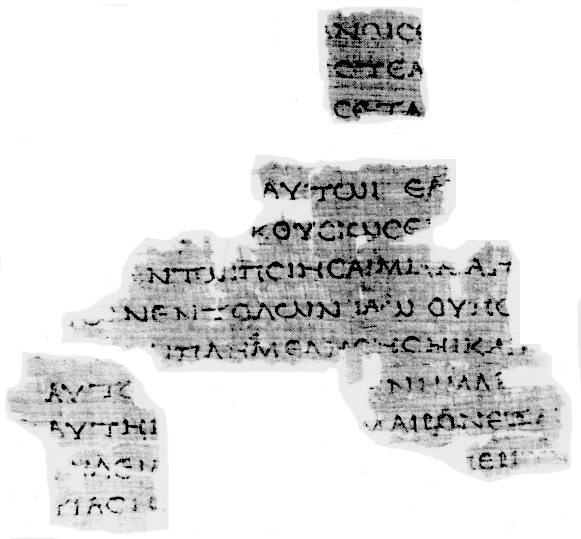
«The first stage [of the development of the divine names in Greek Bible manuscripts] is represented by 4Q LXXLevb, dated  by  C. H. Roberts to the late 1st cent. B.C. or the opening years of the 1st cent. A.D. It has, in Lev 4:27, the unmistakable reading εντολων Ιαω; at Lev 3:12 the final omega  and enough of the preceding alpha are present in the fragments to preclude any other reading there. The four broken papyrus columns within which this occurs reconstruct well throughout with the same reading of the divine name (sometimes with the appropriate Greek article to introduce it). The hand of this scroll has from the first reminded all observers of the best represented hand in P. Fouad Inv. 266  in Cairo (to be discussed below). The latter is the earlier scroll, still in the 1st cent. B.C. The priority here assigned to the Qumran fragments is typological: the MS which allows for the pronunciation, or at least a pronounceable and normal writing, of the Yhwh name in the same hand employed for the rest of the text, derives from a period of LXX transmission prior to all texts which in written form warn against utterance of the Name.»


«Το πρώτο στάδιο [της εξέλιξης των θεϊκών ονομάτων στα ελληνικά Βιβλικά χειρόγραφα] αντιπροσωπεύεται από το χειρόγραφο 4Q LXXLevb, το οποίο χρονολογείται από τον C. H. Roberts στα τέλη του 1ου αι. π.Χ. ή στα πρώτα χρόνια του 1ου αιώνα μ.Χ. Περιέχει, στο Λευιτικό 4:27, την αδιαμφισβήτητη ανάγνωση εντολων Ιαω· στο Λευιτικό 3:12 το τελικό ωμέγα και αρκετό από το άλφα που προηγείται υφίστανται στα σπαράγματα ώστε να αποκλείσουν οποιαδήποτε άλλη ανάγνωση εκεί. Οι τέσσερις αποσπασματικές στήλες του παπύρου όπου περιέχεται μπορούν όλες να ανασυντεθούν καλά με την ίδια ανάγνωση του θεϊκού ονόματος (ορισμένες φορές με το κατάλληλο ελληνικό άρθρο για να το εισάγει). Το χέρι γραφής αυτού του ρόλλου υπενθύμισε εξαρχής σε όλους τους παρατηρητές το καλύτερο αντιπροσωπευτικό χέρι γραφής στον Π[άπυρο] Φουάντ, Αρ. Καταλόγου 266, στο Κάιρο (ο οποίος θα εξεταστεί στη συνέχεια). Πρόκειται για αρχαιότερο ρόλλο, και πάλι εντός του 1ου αι. π.Χ. Η προτεραιότητα που αποδίδεται εδώ στα σπαράγματα του Κουμράν είναι τυπολογική: το χειρόγραφο που επιτρέπει την προφορά, ή τουλάχιστον μια κανονική γραφή που μπορεί να προφερθεί, του ονόματος Ιχβχ στο ίδιο χέρι γραφής που χρησιμοποιήθηκε και για το υπόλοιπο κείμενο, παράχθηκε σε μια περίοδο μεταβίβασης της Ο' που προηγείτο από όλα τα κείμενα τα οποία σε γραπτή μορφή προειδοποιούσαν κατά της προφοράς του Ονόματος».


* Patrick W. Skehan,
"The Divine Name at Qumran, in the Masada Scroll, and in the Septuagint"
[«Το Θεϊκό Όνομα στο Κουμράν, στο Ρόλλο της Μασάδας και στην Εβδομήκοντα»],
The Bulletin of the International Organization of Septuagint and Cognate Studies 13 (1980),
pp./σσ. 28, 29.

[English/Αγγλικά PDF]


MS image source/Πηγή εικόνας χειρογράφου:
ccat.sas.upenn.edu