μια απόπειρα επιστημονικής προσέγγισης της ανθρώπινης θρησκευτικότητας
an attempt for a scientific approach of human religiosity "Sedulo curavi humanas actiones non ridere, non lugere, neque detestari, sed intelligere" —Spinoza, Tractatus Politicus 1:4
⏳ ⌛ First post: October 30, 2008 / Πρώτη ανάρτηση: 30 Οκτωβρίου 2008
.
Showing posts with label ΜΑΡΤΥΡΕΣ ΤΟΥ ΙΕΧΩΒΑ: ΡΩΣΙΑ. Show all posts
Showing posts with label ΜΑΡΤΥΡΕΣ ΤΟΥ ΙΕΧΩΒΑ: ΡΩΣΙΑ. Show all posts
(RNS) — As the world
braces for an expected Russian invasion of Ukraine, Europe’s highest
human rights court found that Russia has violated Jehovah’s Witnesses’
rights to liberty and freedom of religion. The country has been ordered
to pay fines totaling more than 99,000 euros — roughly equivalent to
$112,323.
“These judgments set a critical precedent that Russia has been
unjustly and unlawfully raiding the homes of Jehovah’s
Witnesses,” Jarrod Lopes, spokesperson for Jehovah’s Witnesses, told
Religion News Service in an email. There have been 1,700 such raids
since 2017, he said.
“Any new home raids based solely on the owner’s religious beliefs are
now considered illegal and in violation of the European Convention,”
Lopes said.
The European Court of Human Rights issued rulings on two cases
Tuesday (Feb. 22). Together, the cases address six instances from
2010-2012 in which Russian law enforcement arrested Jehovah’s Witnesses,
raided their homes and places of worship and seized personal items as
well as religious materials.
In both cases, the court found Russia guilty of violating Article 9
of the European Convention on Human Rights, which holds that “Everyone
has the right to freedom of thought, conscience and religion.”
The ruling in Zharinova v. Russia involved a Jehovah’s Witness named
Yekaterina Nikolayevna Zharinova, who was arrested March 17, 2011, while
she was “preaching door-to-door” in her hometown of Ivanteyevka,
according to court documents. Officers interviewed Zharinova at a police
station and seized her personal belongings and religious literature.
She was held at the station for four and a half hours. Though a local
court dismissed Zharinova’s initial complaint in 2011, the European
Court of Human Rights found Russia guilty of violating Article 5, which
protects against unlawful detention, as well as Article 9.
Cheprunovy and Others v. Russia is a separate case that addresses
several incidents between 2010 and 2012. Jehovah’s Witnesses said
Russian authorities searched their private homes and a prayer hall and
seized religious literature such as books and magazines as well as
computers, notebooks and video recordings.
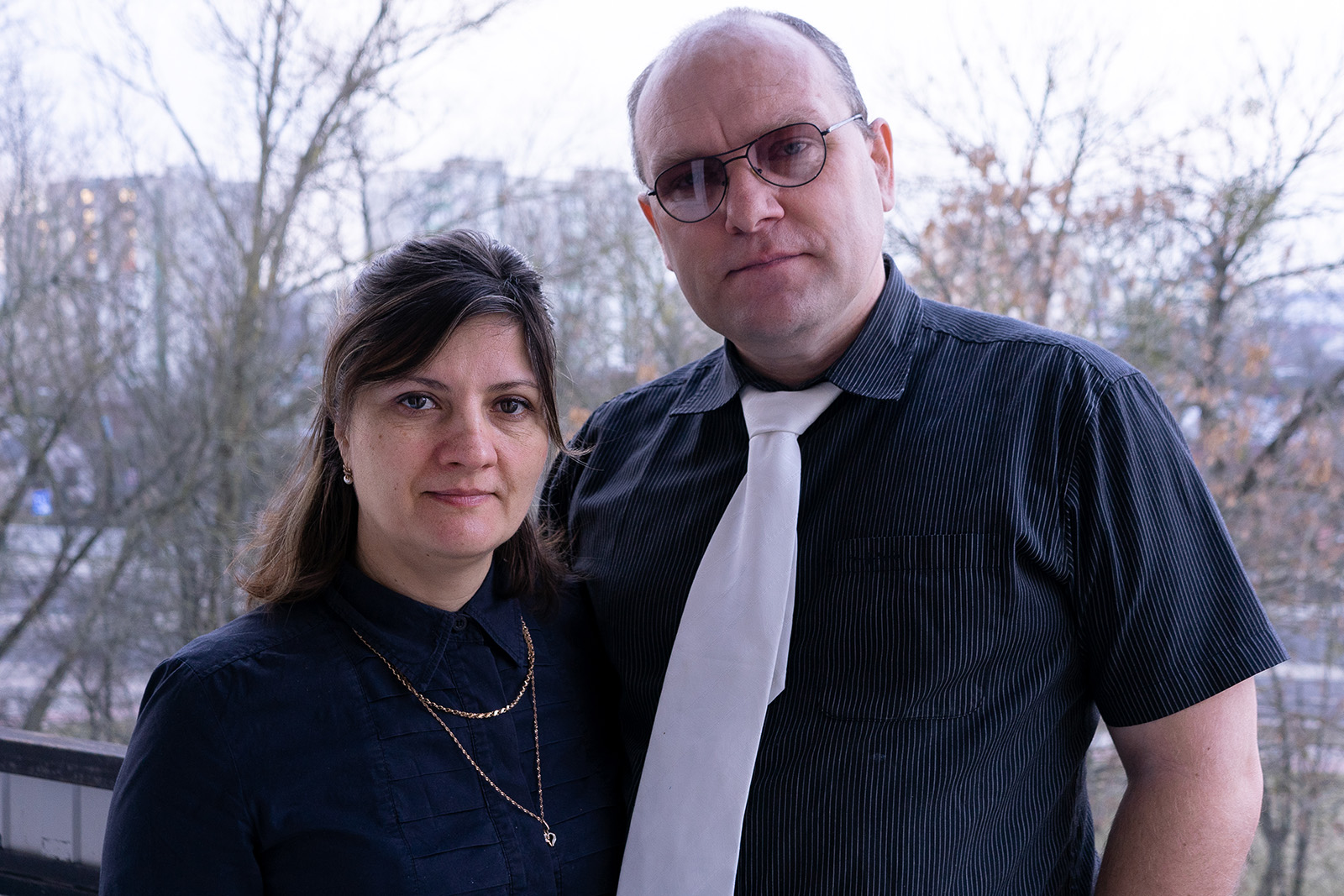
Larisa Vladimirovna Cheprunova and Mikhail Yuryevich Cheprunov in Russia. Photo courtesy of Jehovah’s Witnesses
The ruling says the Russian government suspected the individuals of
being involved in illegal activities primarily because they are
Jehovah’s Witnesses. The court found that the searches violated Article 9
because they were “carried out without relevant and sufficient grounds
and in the absence of safeguards that would confine their impact to
reasonable bounds,” according to court documents.
Both judgments are final and will be enforced by the Council of
Europe’s Committee of Ministers. The rulings are the latest of severalin
which the European Court of Human Rights found Russia guilty of
religious freedom violations against Jehovah’s Witnesses. Lopes told RNS
that these rulings are a prelude to future judgments from the ECHR that
will address “the nation-wide banning of Jehovah’s Witnesses, the
prosecution and imprisonment of believers, as well as the confiscations
of their national headquarters and all their places of worship (Kingdom
Halls).”
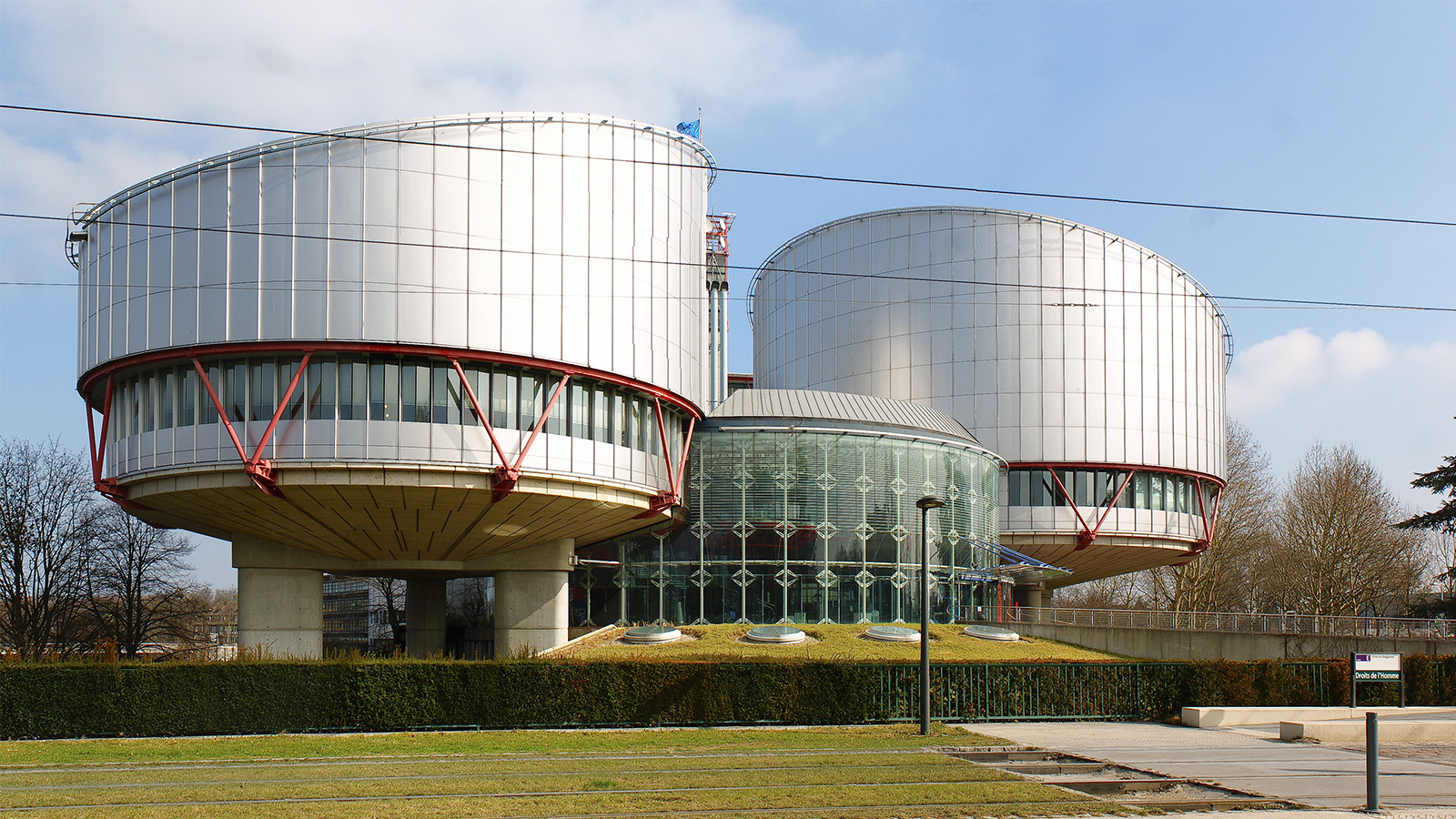
The European Court of Human Rights in Strasbourg, France. Photo by CherryX/Wikipedia/Creative Commons
The rulings come as human rights advocates continue to voice concern
about Russia’s treatment of Jehovah’s Witnesses. More than 80 members of
the denomination are in confinement in Russia, either serving prison
sentences or awaiting trial.
“Today the ECHR sent a clear signal to Russia of what to expect when
the Court deals with the over 60 other cases pending involving Jehovah’s
Witnesses,” said Lopes. “Jehovah’s Witnesses around the world rejoice
to see that their fellow believers in Russia are being validated and
protected by the ECHR for staying true to their religious beliefs.”
As members of the International Religious Freedom or Belief Alliance,
we note with grave concern the increased repression of Jehovah’s
Witnesses in a number of countries. We uphold the right of Jehovah’s
Witnesses to practice their religion and their beliefs and their ability
to adhere to being apolitical and pacifist without fear, harassment,
discrimination, or persecution.
In countries around the world, governments investigate, detain,
arrest, and imprison Jehovah’s Witnesses on account of their religious
beliefs. They are falsely designated as “extremist.” Officials conduct
home raids against Jehovah’s Witnesses, place them in prolonged
pre-trial detention and require excessive prison sentences due to their
religious practices and beliefs, and deny citizenship under domestic
law. They also are subjected to violence and discrimination.
We affirm that the right to freedom of religion or belief
(FoRB) includes the ability to conscientiously object to military
service. We note that the International Covenant on Civil and Political
Rights provides that parties may not derogate from their
obligations with respect to Article 18 in times of public
emergency which threatens the life of a nation. States should not,
therefore, discriminate against individuals based on their religious
beliefs when considering conscientious objection from military service.
Immediately release all Jehovah’s Witnesses jailed
for exercising their religious beliefs, including charges for their
religious expression, activities, and conscientious objection to
military service.
Immediately end the torture and physical abuse of Jehovah’s Witnesses in detention.
Immediately end home raids against Jehovah’s Witnesses.
Immediately address harassment of and discrimination against of Jehovah’s Witnesses.
Immediately eliminate any discrimination against Jehovah’s
Witnesses in decisions with respect to citizenship and/or issuance of
national identification documents.
Create space for conscientious objection through non-military alternative civilian service.
Allow Jehovah’s Witnesses access to their religious literature
and equal access to legal registration for religion or belief groups.
Desist from targeting Jehovah’s Witnesses with ‘anti-extremism’ laws and forced conscription.
Review current “anti-extremism” legislation that severely limits or prohibits all activities of Jehovah organizations.
Cosignatories: Australia, Brazil, Denmark, Greece, Latvia,
Lithuania, Poland, Slovakia, the Netherlands, Ukraine, United Kingdom,
and the United States.
It
was just after sunrise on April 10 when the doorbell rang at Anatoly
and Alyona Vilitkevich’s apartment in Ufa, an industrial city in central
Russia. Their early morning visitors: masked police officers armed with
automatic weapons. “Open up!” the officers shouted. Inside, the married
couple hurried to get dressed and call their lawyer. “There were 10 of
them, including plainclothes investigators,” Alyona, 35, tells Newsweek. “One of them was filming everything. They said I wasn’t allowed to use the telephone.” After
searching the apartment, the officers told Anatoly, a 31-year-old
handyman, to pack some warm clothes. “They said he wouldn’t be coming
home again,” Alyona says. Since the raid, he has been in police custody,
and investigators have not permitted his wife to speak to him, she
says. The police’s tactics that morning
were the type often used to detain dangerous criminals. But Anatoly
isn’t a suspected terrorist, murderer or drug trafficker. Police
arrested him because he and Alyona are members of the Jehovah’s
Witnesses, a Christian evangelical movement known for its members’
door-to-door proselytizing. Jehovah’s Witnesses are also committed
pacifists who historically have been persecuted by governments all over
the world for their refusal to perform military service or salute the
flag. Some of the most brutal repression took place in Fidel Castro’s
Cuba, Nazi Germany and the Soviet Union.
Photograph by The Voorhes
And
now it’s the modern-day Kremlin—with the blessing of the Russian
Orthodox Church—that’s ramping up the pressure on Russia’s estimated
175,000 Jehovah's Witnesses. The state’s crackdown comes as part of a
government-backed drive against minority “foreign” religions. The
campaign began in July 2016, when President Vladimir Putin approved
legislation outlawing missionary work, stipulating that people share
their religious beliefs only at state-registered places of worship. The
law was introduced at a time when Moscow was pushing a major
anti-Western propaganda effort—from accusing the U.S. and U.K. of
plotting to overthrow Putin to boasting about Russia’s ability to reduce
the U.S. to “radioactive ash.” So far, it’s only the followers of
“imported” religions, such as Mormons and Baptists, who have suffered
under the controversial law. That’s because they have frequent problems
gaining state permission for churches. They often have little choice but
to gather informally at the homes of their congregants.
But it’s the Jehovah Witnesses—whose world headquarters
are in New York—who are taking most of the heat. In April 2017,
Russia’s Supreme Court ruled to classify them as an “extremist
organization,” putting the Christian denomination on par with the
Islamic State militant group (ISIS) and neo-Nazi movements. Attorneys
for the Justice Ministry claimed the Jehovah’s Witnesses posed a threat
to “public order and public security,” and Russian officials accused
them of preaching the “exclusivity and supremacy” of their beliefs.Russia
also closed the group’s prayer halls and banned its translation of the
Bible (the main difference between it and other Christian versions: the
word Jehovah in place of God or Lord). The ban came despite a provision
in Russia law that forbids courts from classifying even extracts from
the holy books of the country’s four major religions—Christianity,
Islam, Judaism and Buddhism—as extremist.
The Jehovah's Witnesses world headquarters building in the Brooklyn borough of New York. Michael Nagle/Bloomberg/Getty
Critics
accuse the authorities of exploiting anti-terrorism laws to pressure
the group. “There were no grounds at all to bar the Jehovah’s
Witnesses,” says Alexander Verkhovsky, an expert on anti-extremist
legislation at the Moscow-based Sova human rights center. “Yes, they
insist that their religion is the only right one. But so do most other
religions. No one has even accused them of any specific extremist
actions.” (Russia’s Justice Ministry did not respond to a request for
comment.) Analysts
at the United Nations say the suppression of the Christian movement
signals a “dark future” for religious freedom in Russia. Kremlin
officials insist, however, that the Supreme Court ruling merely
blacklists the Jehovah’s Witnesses organization, and does not infringe
upon individuals’ rights to practice their religion of choice, as
guaranteed by the country’s post-Soviet constitution. Many
observers disagree. “The escalating crackdown on the Jehovah’s Witnesses
without doubt represents Russia’s worst backsliding on religious
freedom since the Soviet era,” says Geraldine Fagan, editor of East-West
Church and Ministry Report, an online publication that monitors
Christianity-related issues in former Soviet countries.
Alyona and Anatoly Vilitkevich Photograph courtesy of Anatoly and Alyona Vilitkevich Police didn’t just make arrests
during the nationwide operation; they also reportedly questioned dozens
of people, including children and the elderly. According to Sivulskiy,
officers then pressured some people to renounce their faith, claiming
that they would be released if they did so. Jehovah’s Witnesses have
also reported arson attacks on their properties, and threats by
officials to remove their children and place them in the care of the
state. Under Russian law, minors can be taken away from their parents if
they are involved in “extremist” activities. (Russia’s Interior
Ministry did not respond to a request for comment.) This April also saw the start of the trial of Dennis Christensen, a 46-year-old Danish citizen. He was arrested in May 2017 by armed police
wearing balaclavas and bulletproof vests after they stormed a Jehovah’s
Witnesses prayer hall in Oryol, a small city 225 miles south of Moscow.
The officers were accompanied by plainclothes investigators from the
FSB security service, according to video footage of the raid, as they
stood guard over some three dozen attendees, including children.
Dennis Christensen, the Dane detained in Russia. Photograph by Simon Kruse
The
authorities have held Christensen in a police detention facility since
his arrest. Conditions in the jail are grim, he told reporters recently.
He has been forced to wash himself with water from plastic bottles and
survive on groats and other barely edible food. His health has
deteriorated behind bars: His wife, Irina, says he has suffered from
back pain, digestive issues and ear infections. Christensen, who has
lived in Russia since 2000, faces up to 10 years in prison if found
guilty of organizing prayer meetings. Danish Embassy officials have
attended court hearings but have so far made no public statements about
the trial. As
the clampdown continues, human rights groups are speaking out.
“Dropping the case against Christensen would be a good first step toward
ending the raids and other criminal cases against people who are merely
practicing their faith,” says Rachel Denber, deputy director for Europe
and Central Asia at Human Rights Watch. Memorial, Russia’s oldest human
right organization, describes Christensen as “the first person in the
history of modern Russia to be deprived of his freedom because of his
religious affiliation.” The Christensen trial may be the first of
its kind in recent decades, but Russia has a long, dark history of
religious persecution. Authorities in the Soviet Union executed at least
200,000 members of the Russian Orthodox clergy, according to Kremlin
records, while millions of other Christians faced imprisonment or
discrimination at the hands of the officially atheist state. For
Russia’s Jehovah’s Witnesses, the arrests and raids are a throwback to
those years of terror. “Older believers tell us what is happening now is
simply a continuation of the Soviet period. The same methods of
repression are being used,” says Sergei, a Moscow-based Jehovah’s
Witness. (Like many other movement members, he asked Newsweek not to reveal his surname over security concerns.)
Putin, left, and Patriarch Kirill of Moscow light candles at the New Jerusalem Monastery in the town of Istra. Valery Sharifulin/TASS/Getty
The
difference is that Soviet authorities targeted followers of all
religions without exception; this time, the Kremlin is acting with the
approval and support of its powerful ally, the Russian Orthodox Church.
Although Russia’s constitution stipulates a divide between church and
state, critics say the Kremlin and church have grown uncomfortably close
during Putin’s almost two-decade rule. In recent years, Patriarch Kirill,
the church’s leader, has made public statements on a range of issues,
from Russia’s “holy war” in Syria to the “abomination” of gay marriage.
The patriarch has also described Putin’s rule as a “miracle of God.” Kirill
hasn’t spoken publicly about the state’s campaign against the Jehovah’s
Witnesses, but church spokespeople have been fervent in their support
of it. “[The Jehovah’s Witnesses] manipulate people’s senses and destroy
minds and families,” says Metropolitan Hilarion, an aide to the
patriarch. Ultra-conservative Orthodox Christian activists close to
Kirill have also welcomed the Supreme Court’s decision to prohibit the
group. “The Jehovah’s Witnesses are trying to force a foreign religion
on Russians. But no one wants to see them here, and they should go back
to where they came from,” says Andrey Kormukhin, the founder of Sorok
Sorokov, an activist group described by its critics as the Russian
Orthodox Church’s “combat unit.” According to an opinion poll taken last
year, 80 percent of Russians supported the ban on the Jehovah’s
Witnesses’ activities. That’s approximately the same percentage of the
population who identify as Russian Orthodox Christians. Like many
other religious groups, including the Russian Orthodox Church, the
Jehovah’s Witnesses have been rocked in recent years by child abuse
scandals. In Britain, dozens of current and former members alleged in
March that they had been sexually assaulted. They also accused senior
members of covering up the abuse. “Elders treat victims of child abuse
with compassion, understanding, and kindness,” the Jehovah’s Witnesses
responded in a statement. However, there have been no allegations of
child abuse against the religious group in Russia, and attorneys for the
Justice Ministry did not cite the issue ahead of the Supreme Court’s
decision to classify them as extremists. Despite the Russian
Orthodox Church’s enthusiasm for the state’s bid to suppress the
Jehovah’s Witnesses, some analysts say the decision to approve a
nationwide ban was likely driven by political and security concerns.
“The Jehovah’s Witnesses were targeted because they do not support the
wave of patriotism sweeping the country during the confrontation with
the West,” says Roman Lunkin, a religion analyst at the Russian Academy
of Sciences in Moscow. “There is a real fear of religion and religious
activity among the authorities and the security services.”
Orthodox Church activist Andrei Kormukhin, center. Mikhail Pochuyev/TASS/Getty
These
anxieties, Lunkin adds, extend even to civil activism by Russian
Orthodox Christians. “Putin might be an Orthodox Christian, but if you
stand on the streets of Moscow with a sign saying ‘Let’s build a
Christian community in Russia,’ then, under our laws, you can be locked
up,” he says. Unsurprisingly, some Jehovah’s Witnesses want to get
out of Russia. Spokespeople estimate that hundreds have fled the
country in recent months. Yet tens of thousands are determined to stay,
and they see the Kremlin’s repression as a test of their convictions.
“My years of serving Jehovah God under a ban taught me that this makes a
believer even stronger,” says Pavel Sivulskiy, 86, who says he spent
seven years in a Soviet gulag for his beliefs. “We pray more often and
more ardently, and are together more frequently.”
A Jehovah's Witnesses Bible. Scott Keeler/Tampa Bay Times/AP
With
their prayer halls shuttered, Russia’s Jehovah’s Witnesses have
resorted to the Soviet-era practice of gathering in secret in each
other’s homes. At a recent meeting in a one-bedroom apartment in
northern Moscow, some two dozen men and women discussed Scripture,
prayed and listened to lectures on the virtues of forgiveness. People
spilled out of the tiny living room into the kitchen, softly singing
hymns so as not to alert the neighbors. Many of those present said they
had discovered the religion in the 1990s, following the collapse of the
Soviet Union, when millions of Russians explored once-taboo ideas. “We
are hurt and insulted by the prohibition of our religious beliefs,”
says Yelena, an elderly woman who owns the apartment. “But we’re not
afraid. How can we be afraid when we have faith?”