.

Showing posts with label ΘΕΟΣ: ΤΙΤΛΟΙ. Show all posts

Wednesday, May 2, 2012

«Κύριος» ο Θεός:
Ένα τίτλος που δεν αποδίδεται στον Θεό στην ΚΔ
αλλά αποτελεί(;) εβδομηκόντεια κληρονομιά /

"Lord" the God:
A title not given to God by the NT
but consists(?) a septuagintal inheritance


Baptism of Christ

Sta Maria in Cosmedin, Ravenna


Ο Θεός χαρακτηρίζεται ως κύριος συνήθως μόνον εν τοις εκ τοις Π. Διαθήκης ειλημμένοις χωρίοις, τούθ' όπερ επιτρέπει όπως συμπεράνωμεν ότι παρά τη την μετάφρασιν των Ο' χρησιμοποιούση χριστιανική κοινότητι και ιδίως επί παλαιστινού εδάφους, ο τίτλος ούτος, πέρα της διά της Π. Διαθήκης χρησιμοποιήσεως αυτού, ουδόλως ήτο εύχρηστος ως κατηγόρημα του Θεού.


* Γεώργιος Α. Γαλίτης +,
Θρησκευτική και Ηθική Εγκυκλοπαίδεια 7:1216 (1214-1219).

Friday, September 23, 2011

The usage of the title "God"
for Jesus
in the New Testament /

Η χρήση του τίτλου «Θεός»
για τον Ιησού
στην Καινή Διαθήκη


Is this usage [i.e., of calling Jesus God] a Hellenistic contribution to the theological vocabulary of Christianity? Since we have no evidence that Jesus was called God in the Jerusalem or Palestinian communities of the first two decades of Christianity, the prima-facie evidence might suggest Hellenistic origins. This is supported by the fact that in two New Testament passages "God" is intimately joined to "Saviour" as a title for Jesus (Tit 2:13; 2 Pt 1:1), and "Saviour" is to some extent a Hellenistic title. However, there is other evidence to suggest that the usage had its roots in the Old Testament; and so, if the usage is non-Palestinian, it may have arisen among converts from Diaspora Judaism. As we saw, Heb 1:8-9 is a citation of Ps 45. The confession of Thomas in Jn 20:28 echoes an Old Testament formula (although, as we pointed out, one cannot exclude the possibility of an anti-Domitian apologetic). The background for Jn 1:1 is the opening of Genesis, and the concept of the Word reflects Old Testament themes of the creative word of God and personified Wisdom. Perhaps the best we can do from the state of the evidence is to leave open the question of the background of the custom of calling Jesus God.

The slow development of the usage of the title "God" for Jesus requires explanation. Not only is there the factor that Jesus is not called God in the earlier strata of New Testament material, but also there are passages, cited in the first series of texts above, that by implication reserve the title "God" for the Father. Moreover, even in the New Testament works that speak of Jesus as God, there are also passages that seem to militate against such a usage—a study of these texts will show that this is true of the Pastorals and the Johannine literature. The most plausible explanation is that in the earliest stage of Christianity the Old Testament heritage dominated the use of the title "God"; hence, "God" was a title too narrow to be applied to Jesus. It referred strictly to the Father of Jesus, to the God to whom he prayed. Gradually, (in the 50's and 60's?) in the development of Christian thought "God" was understood to be a broader term. It was seen that God had revealed so much of Himself in Jesus that "God" had to be able to include both Father and Son. The late Pauline works seem to fall precisely in this stage of development. If Rom 9:5 calls Jesus God, it is an isolated instance within the larger corpus of the main Pauline works, which think of Jesus as Lord, and of the Father as God. By the time of the Pastorals, however, Jesus is well known as God-and-Saviour. The Johannine works come from the final years of the century, when the usage is common. Yet, some of the material that has gone into the fourth Gospel is traditional material about Jesus which has been handed down from a much earlier period. Therefore, there are passages in John (14:28; 17:3; 20:17) that reflect an earlier mentality. We can only sketch the broad lines of such a development, but we can be reasonably confident that these lines are true.


* Raymond E. Brown,
“Does the New Testament Call Jesus God?”
[«Αποκαλεί η Καινή Διαθήκη τον Ιησού Θεό;»]
Theological Studies, 26 (1965),
pp./σσ. 569, 570.
[English/Αγγλικά, PDF]


*    =    *

Thursday, September 22, 2011

Ονόματα του Θεού
& η ουσία του Θεού
κατά τον Αθανάσιο Αλεξανδρείας /

Names of God
& the essence of God
according to Athanasius of Alexandria


34. Ἐπεὶ (καλὸν γὰρ αὐτοὺς ἐρέσθαι τοῦτο) εἴπατε, τίνες εἰσὶν οὓς προφασίζεσθε σκανδαλίζεσθαι καὶ θορυβεῖσθαι ἐπὶ τούτοις [ενν. τοῖς ῥήμασι]; Τῶν μὲν γὰρ εὐσεβούντων εἰς τὸν Χριστὸν οὐδείς, αὐτὰ γὰρ πρεσβεύουσι καὶ ἐκδικοῦσιν. Εἰ δὲ τῶν Ἀρειανῶν εἰσιν οἱ τοῦτο πάσχοντες, τί θαυμαστόν, εἰ ἐπὶ τοῖς ἀναιροῦσιν αὐτῶν τὴν αἵρεσιν ἄχθονται; Οὐ γάρ ἐστιν αὐτοῖς σκάνδαλον τὰ ῥήματα, ἀλλὰ λύπη ὅτι στηλογραφία κατὰ τῆς ἀσεβείας αὐτῶν ἐστιν. Οὐκοῦν παύσασθε γογγύζοντες κατὰ τῶν πατέρων καὶ τοιαῦτα προφασιζόμενοι, ἐπεὶ ὥρα ὑμᾶς καταμέμφεσθαι καὶ τῷ κυριακῷ σταυρῷ ὅτι «Ἰουδαίοις μὲν σκάνδαλόν ἐστιν, ἔθνεσι δὲ μωρία», ὡς εἶπεν ὁ ἀπόστολος. Ἀλλ’ ὥσπερ οὐ φαῦλος ὁ σταυρός· ἡμῖν γὰρ τοῖς πιστεύουσίν ἐστι «Χριστὸς θεοῦ δύναμις καὶ θεοῦ σοφία», κἂν Ἰουδαῖοι μαίνωνται, οὕτως οὐ φαῦλα τὰ τῶν πατέρων ῥήματα, ἀλλ’ ὠφέλιμα τοῖς γνησίως ἐντυγχάνουσι καὶ ἀναιρετικὰ πάσης ἀσεβείας ἐστί, κἂν οἱ Ἀρειανοὶ πολλάκις διαρρηγνύωνται κατακρινόμενοι παρ’ αὐτῶν.

Ὅτε τοίνυν ἡ περὶ τῶν σκανδαλιζομένων ἀπίθανος δέδεικται πρόφασις, εἴπατε λοιπὸν ὑμεῖς, πῶς οὐκ ἀρέσκεσθε τῷ ἐκ τῆς οὐσίας ὀνόματι; Τοῦτο γὰρ πρῶτον ἀναγκαῖον ἀνακρῖναι, καίτοι καὶ ὑμεῖς ἐγράψατε ἐκ τοῦ πατρὸς γεγεννῆσθαι τὸν υἱόν. Εἰ μὲν οὖν τὸν πατέρα ὀνομάζοντες ἢ τὸ θεὸς ὄνομα λέγοντες οὐκ οὐσίαν σημαίνετε οὐδὲ αὐτὸν τὸν ὄντα ὅπερ ἐστὶ κατ’ οὐσίαν νοεῖτε, ἀλλ’ ἕτερόν τι περὶ αὐτὸν ἢ τὸ γοῦν χεῖρον, ἵνα μὴ παρ’ ἐμοῦ λέγηται, διὰ τούτων σημαίνετε, ἔδει μὴ γράφειν ὑμᾶς ‘ἐκ τοῦ πατρὸς’ τὸν υἱόν, ἀλλ’ ‘ἐκ τῶν περὶ αὐτὸν ἢ τῶν ἐν αὐτῷ’, ἵνα φεύγοντες λέγειν ἀληθῶς πατέρα τὸν θεὸν σύνθετον δὲ τὸν ἁπλοῦν καὶ σωματικῶς αὐτὸν ἐπινοοῦντες καινοτέρας βλασφημίας ἐφευρεταὶ γένησθε. Οὕτω δὲ νοοῦντες ἐξ ἀνάγκης καὶ τὸν λόγον καὶ τὸ υἱὸς οὐκ οὐσίαν, ἀλλ’ ὄνομα μόνον νομίζετε καὶ λοιπὸν ἄχρις ὀνομάτων ἔχετε τὴν ἑαυτῶν φαντασίαν· καὶ ἃ λέγετε οὐκ εἶναι πιστεύετε, ἀλλὰ μὴ εἶναι φρονεῖτε.

35. Τοῦτο δὲ Σαδδουκαίων μᾶλλον καὶ τῶν παρ’ Ἕλλησι λεχθέντων ἀθέων ἐστὶ τὸ τόλμημα. Διὸ οὐδὲ τὴν κτίσιν αὐτοῦ τοῦ ὄντος θεοῦ δημιούργημα εἶναι φήσετε, εἴ γε τὸ πατὴρ καὶ τὸ θεὸς οὐκ αὐτὴν τὴν τοῦ ὄντος οὐσίαν σημαίνουσιν, ἀλλ’ ἕτερόν τι ὅπερ ὑμεῖς ἀναπλάττετε. Ἀλλὰ τοῦτο δυσσεβὲς καὶ λίαν ἀπρεπές ἐστι καὶ μόνον ἐνθυμεῖσθαι. Εἰ δὲ ὅταν ἀκούωμεν «ἐγώ εἰμι ὁ ὢν» καὶ «ἐν ἀρχῇ ἐποίησεν ὁ θεὸς τὸν οὐρανὸν καὶ τὴν γῆν» καὶ «ἄκουε Ἰσραήλ, κύριος ὁ θεός σου κύριος εἷς ἐστι» καὶ «τάδε λέγει κύριος παντοκράτωρ», οὐχ ἕτερόν τι ἀλλ’ αὐτὴν τὴν ἁπλῆν καὶ μακαρίαν καὶ ἀκατάληπτον τοῦ ὄντος οὐσίαν νοοῦμεν, κἂν γὰρ ἀδυνάτως ἔχωμεν καταλαβεῖν, ὅ τι ποτέ ἐστιν, ἀλλ’ ἀκούοντες τὸ πατὴρ καὶ τὸ θεὸς καὶ τὸ παντοκράτωρ οὐχ ἕτερόν τι, ἀλλ’ αὐτὴν τὴν τοῦ ὄντος οὐσίαν σημαινομένην νοοῦμεν. Εἰρήκατε δὲ καὶ ὑμεῖς ‘ἐκ τοῦ θεοῦ τὸν υἱόν’, δηλονότι ‘ἐκ τῆς οὐσίας τοῦ πατρὸς’ αὐτὸν εἰρήκατε. Ἐπειδὴ δὲ καὶ πρὸ ὑμῶν λέγουσιν αἱ γραφαὶ τὸν κύριον υἱὸν τοῦ πατρός, καὶ πρὸ αὐτῶν αὐτὸς ὁ πατὴρ εἴρηκεν «οὗτός ἐστιν ὁ υἱός μου ὁ ἀγαπητός», υἱὸς δὲ οὐδὲν ἕτερόν ἐστιν ἢ τὸ ἐκ τοῦ πατρὸς γέννημα· πῶς οὐ φαίνονται καλῶς εἰρηκότες οἱ πατέρες ἐκ τῆς οὐσίας τοῦ πατρὸς τὸν υἱὸν λογισάμενοι ταυτὸν εἶναι τὸ εἰπεῖν ὀρθῶς ἐκ τοῦ θεοῦ καὶ τὸ εἰπεῖν ἐκ τῆς οὐσίας; Τὰ μὲν γὰρ κτίσματα πάντα, κἂν ἐκ τοῦ θεοῦ λέγηται γεγενῆσθαι, ἀλλ’ οὐχ ὡς ὁ υἱός εἰσιν ἐκ τοῦ θεοῦ· οὐ γὰρ γεννήματα, ἀλλὰ ποιήματά εἰσι τὴν φύσιν. «Ἐν ἀρχῇ γοῦν ὁ θεὸς» οὐκ ‘ἐγέννησεν’ ἀλλ’ «ἐποίησε τὸν οὐρανὸν καὶ τὴν γῆν καὶ πάντα τὰ ἐν αὐτοῖς» εἴρηται. Καὶ οὐχ ‘ὁ γεννῶν’ ἀλλ’ «ὁ ποιῶν τοὺς ἀγγέλους αὐτοῦ πνεύματα καὶ τοὺς λειτουργοὺς αὐτοῦ πυρὸς φλόγα». Εἰ δὲ ὁ ἀπόστολος εἴρηκεν· «εἷς θεός, ἐξ οὗ τὰ πάντα», ἀλλ’ οὐ τὸν υἱὸν συναριθμῶν τοῖς πᾶσι τοῦτό φησιν. Ἀλλ’ ἐπειδὴ τῶν Ἑλλήνων οἱ μὲν νομίζουσι κατὰ τύχην καὶ ἐξ ἀτόμων συμπλοκῆς καὶ ὁμοιομερῶς ἐκ ταυτομάτου συνεστάναι τὴν κτίσιν καὶ μὴ ἔχειν τὸν αἴτιον, οἱ δὲ ἐξ αἰτίου μὲν αὐτὴν γεγονέναι, οὐ μὴν καὶ διὰ τοῦ λόγου, τῶν δὲ αἱρετικῶν ἕκαστος ὡς ἠθέλησεν ἀνεπλάσατο καὶ περὶ τῆς κτίσεως μυθολογεῖ, τούτου χάριν ὁ ἀπόστολος ἀναγκαίως συνείρηκε τὸ ἐκ τοῦ θεοῦ· ἵνα καὶ τὸν ποιητὴν γνωρίσῃ καὶ τὴν ἐκ τοῦ βουλήματος αὐτοῦ τῶν πάντων δημιουργίαν ἀποδείξῃ, εὐθὺς δ’ οὖν ἐπιφέρει «καὶ εἷς κύριος Ἰησοῦς Χριστός, δι’ οὗ τὰ πάντα», ἵνα τῶν πάντων ἐξάρῃ τὸν υἱόν. Τὰ γὰρ ‘ἐκ τοῦ θεοῦ’ λεγόμενα πάντα ταῦτα δι’ υἱοῦ γέγονε καὶ οὐχ οἷόν τε ὁμοίαν ἔχειν τὰ δημιουργούμενα τῷ δημιουργοῦντι τὴν γένεσιν, καὶ ἵνα τὸ ‘ἐκ τοῦ θεοῦ’ λεγόμενον ὧδε ἄλλως ἐπὶ τῶν ποιημάτων αὐτὸ σημαίνεσθαι διδάξῃ, ἢ ὡς ἐπὶ υἱοῦ λεγόμενον νοεῖται. ὁ μὲν γὰρ γέννημα, τὰ δὲ ποιήματά ἐστι. Διὸ καὶ ὁ μὲν υἱὸς ἴδιον τῆς οὐσίας γέννημα, τὰ δὲ τοῦ βουλήματος δημιουργήματα.


34. For answer, what is much to the purpose, Who are they whom you pretend are offended and troubled at these terms? Of those who are religious towards Christ not one; on the contrary they defend and maintain them. But if they are Arians who thus feel, what wonder they should be distressed at words which destroy their heresy? For it is not the terms which offend them, but the proscription of their irreligion which afflicts them. Therefore let us have no more murmuring against the Fathers, nor pretence of this kind; or next you will be making complaints of the Lord's Cross, because it is 'to Jews an offense and to Gentiles foolishness,' as said the Apostle (1 Corinthians 1:23-24). But as the Cross is not faulty, for to us who believe it is 'Christ the power of God and the wisdom of God,' though Jews rave, so neither are the terms of the Fathers faulty, but profitable to those who honestly read, and subversive of all irreligion, though the Arians so often burst with rage as being condemned by them.

Since then the pretence that persons are offended does not hold, tell us yourselves, why is it you are not pleased with the phrase 'of the essence' (this must first be enquired about), when you yourselves have written that the Son is generated from the Father? If when you name the Father, or use the word 'God,' you do not signify essence, or understand Him according to essence, who is that He is, but signify something else about Him, not to say inferior, then you should not have written that the Son was from the Father, but from what is about Him or in Him; and so, shrinking from saying that God is truly Father, and making Him compound who is simple, in a material way, you will be authors of a newer blasphemy. And, with such ideas, you must needs consider the Word, and the title 'Son,' not as an essence but as a name only, and in consequence hold your own views as far as names only, and be talking, not of what you believe to exist, but of what you think not to exist.

35.
But this is more like the crime of the Sadducees, and of those among the Greeks who had the name of Atheists. It follows that you will deny that even creation is the handy-work of God Himself that is; at least, if 'Father' and 'God' do not signify the very essence of Him that is, but something else, which you imagine: which is irreligious, and most shocking even to think of. But if, when we hear it said, 'I am that I am,' and, 'In the beginning God created the heaven and the earth,' and, 'Hear, O Israel, the Lord our God is one Lord,' and, 'Thus says the Lord Almighty'
(Exodus 3:14; Genesis 1:1; Deuteronomy 6:4), we understand nothing else than the very simple, and blessed, and incomprehensible essence itself of Him that is, (for though we be unable to master what He is, yet hearing 'Father,' and 'God,' and 'Almighty,' we understand nothing else to be meant than the very essence of Him that is); and if you too have said, that the Son is from God, it follows that you have said that He is from the 'essence' of the Father. And since the Scriptures precede you which say, that the Lord is Son of the Father, and the Father Himself precedes them, who says, 'This is My beloved Son?' (Matthew 3:17), and a son is no other than the offspring from his father, is it not evident that the Fathers have suitably said that the Son is from the Father's essence? Considering that it is all one to say rightly 'from God,' and to say 'from the essence.' For all the creatures, though they be said to have come into being from God, yet are not from God as the Son is; for they are not offsprings in their nature, but works. Thus, it is said, 'in the beginning God,' not 'generated,' but 'made the heaven and the earth, and all that is in them' (Genesis 1:1). And not, 'who generates,' but 'who makes His angels spirits, and His ministers a flame of fire' (Psalm 104:4). And though the Apostle has said, 'One God, from whom all things' (1 Corinthians 8:6), yet he says not this, as reckoning the Son with other things; but, whereas some of the Greeks consider that the creation was held together by chance, and from the combination of atoms; and spontaneously from elements of similar structure, and has no cause; and others consider that it came from a cause, but not through the Word; and each heretic has imagined things at his will, and tells his fables about the creation; on this account the Apostle was obliged to introduce 'from God,' that he might thereby certify the Maker, and show that the universe was framed at His will. And accordingly he straightway proceeds: 'And one Lord Jesus Christ, through whom all things' (1 Corinthians 8:6), by way of excepting the Son from that 'all' (for what is called God's work, is all done through the Son; and it is not possible that the things framed should have one origin with their Framer), and by way of teaching that the phrase 'of God,' which occurs in the passage, has a different sense in the case of the works, from what it bears when used of the Son; for He is offspring, and they are works: and therefore He, the Son, is the proper offspring of His essence, but they are the handywork of his will.


* Αθανάσιος Αλεξανδρείας / Athanasius of Alexandria,
Ἐπιστολὴ περὶ τῶν γενομένων ἐν τῇ Ἀριμίνῳ τῆς Ἰταλίας καὶ ἐν Σελευκείᾳ τῆς Ἰσαυρίας συνόδων / De synodis Arimini in Italia et Seleuciae in Isauria 34, 35.
[PG 26, 753]
[Ελληνικά-Αγγλικά/Greek-English, PDF]


Tuesday, September 20, 2011

Η ανασκευή
των θεϊκών προσωνυμιών & τίτλων
στο κείμενο της Εβδομήκοντα:
Μια πορεία από τη μεταγραφή προς τη μετάφραση /

The revision
of divine appelations & titles
in the LXX text:
A course from transcription to translation


«Καὶ ηὔξατο εὐχὴν Κυρίῳ λέγουσα·
Ἀδωναΐ Κύριε Ἐλωὲ [Ἐλωαΐ] Σαβαώθ, ...»

– 1Σαμ[Ο': 1Βασ] 1:11.


"And vowed a vow to the Lord, saying:
"Adonai, Lord, Eloai, Sabaoth, ...""

– 1 Reigns 1:11, NETS.


* Zipora Talshir,
"The Representation of the Divine Epithet ‮צבאות‬ in the Septuagint and the Accepted Division of the Books of Kingdoms"
[«Η αναπαράσταση του Θεϊκού Επιθέτου ‮צבאות‬ στην Εβδομήκοντα και η Παραδεκτή Διαίρεση του Βιβλίου των Βασιλείων»],
The Jewish Quarterly Review New Series, Vol./Τόμ. 78, No./Αρ. 1/2 (Jul. - Oct./Ιούλ-Οκτ, 1987),
University of Pennsylvania Press
pp./σσ. 74, 75 [57-75].


Wednesday, December 8, 2010

Maimonides & God's "nomen proprium" /

Ο Μαϊμονίδης & το "κύριο όνομα" του Θεού


Moses Maimonides / Ο Μωυσής Μαϊμονίδης

«It is well known that all the names of God occurring in Scripture are derived from His actions, except one, namely, the Tetragrammaton, which consists of the letters yod, hé, vau and hé. This name is applied exclusively to God, and is on that account called Shem ha-meforash, “The nomen proprium.” It is the distinct and exclusive designation of the Divine Being; whilst His other names are common nouns, and are derived from actions, to which some of our own are similar, as we have already explained. Even the name Adonay, “Lord,” which has been substituted for the Tetragrammaton, is derived from the appellative “lord”. [...] Every other name of God is a derivative, only the Tetragrammaton is a real nomen proprium, and must not be considered from any other point of view. [...] It has thus been shown that the shem ha-meforash (the proper name of God) is the Tetragrammaton, and that this is the only name which indicates nothing but His essence, and therefore our Sages in referring to this sacred term said “‘My name’ means the one which is peculiar to Me alone.”»


«Είναι καλά γνωστό ότι όλα τα ονόματα του Θεού που υπάρχουν στη Γραφή παράγονται από τις ενέργειές Του, εκτός από ένα, ήτοι το Τετραγράμματο, το οποίο αποτελείται από τα γράμματα ιώδ, χε, βάου και χε. Αυτό το όνομα εφαρμόζεται αποκλειστικά στον Θεό και εξαιτίας αυτού αποκαλείται Σεμ χα-μεφοράς, "Το κύριο όνομα". Είναι η διακριτική και αποκλειστική ονομασία του Θεϊκού Όντος· ενώ τα άλλα ονόματά Του είναι προσηγορικά ονόματα και παράγονται από ενέργειες, κάποιες από τις οποίες είναι όμοιες με τις δικές μας, όπως ήδη εξηγήσαμε. Ακόμη και το όνομα Αδωνάι, "Κύριος", το οποίο αποτελεί υποκατάστατο του Τετραγράμματου, παράγεται από το προσωνύμιο "κύριος". [...] Κάθε άλλο όνομα του Θεού είναι παράγωγο, μόνο το Τετραγράμματο είναι πραγματικό κύριο όνομα και δεν πρέπει να υφίσταται διαφορετική άποψη επ' αυτού. [...] Έτσι, έχει γίνει φανερό ότι το σεμ χα-μεφοράς (το κύριο όνομα του Θεού) είναι το Τετραγράμματο και ότι αυτό είναι το μόνο όνομα που δηλώνει αποκλειστικά την ουσία Του και συνεπώς οι Πατέρες μας αναφερόμενοι σε αυτό τον ιερό όρο είπαν “‘Το όνομά μου’ σημαίνει εκείνο που είναι ιδιάζον σε Εμένα και μόνο”».


—Moses ben Maimon / Μωυσής Μαϊμονίδης,
The Guide for the Perplexed
(Moreh Nebuchim / Dalalat al-Hairin / Οδηγός των Περιπλανώμενων),
M. Friedlander (transl.), Dover Publications 1971,
Chapter LXI / Κεφάλαιο 61.
[English/Αγγλικά, PDF]


Maimonides' signature / Υπογραφή του Μαϊμονίδη


Thursday, November 18, 2010

IAO,
an ancient phonetic trancription
of the Tetragrammaton,
still pronounced by Christians
at the 4th or 5th cent. C.E. /

ΙΑΩ,
μια αρχαία φωνητική μεταγραφή
του Τετραγράμματου,
εξακολουθούσε να προφέρεται
από Χριστιανούς τον 4ο ή 5ο αι. Κ.Χ.


ΙΑΩ ΣΑΒΑΩΘ ΑΔΩΝΑΙ ΕΛΩΕ
Ιαώ Σαβαώθ Αδωνάι Ελωέ
(ΙΧΒ[Χ] των Στρατευμάτων, Κύριος, Θεός]

IAO SABAOTH ADONAI ELOE
(YHW[H] of Armies, Lord, God)


P.Oslo inv. 303

Christian
amulet, 4/5th  century  C.E. /
Χριστιανικό φυλακτό, 4/5ος αιώνας Κ.Χ.

Unknown  place,  province  of  Egypt /
Άγνωστος τόπος, επαρχία της Αιγύπτου


* Oslo Papyri Electronic System,
P.Oslo inv. 303  [also here / επίσης εδώ].


See also / Βλέπε επίσης:


= = + + = =

Saturday, September 11, 2010

Origen: Divine names as a means of exercising power /

Ωριγένης: Θεϊκά ονόματα ως μέσα για άσκηση δύναμης


«Τὸ μὲν Σαβαὼθ ὄνομα καὶ τὸ Ἀδωναῒ καὶ ἄλλα παρ' Ἑβραίοις μετὰ πολλῆς σεμνολογίας παραδιδόμενα οὐκ ἐπὶ τῶν τυχόντων καὶ γενητῶν κεῖται πραγμάτων ἀλλ' ἐπί τινος θεολογίας ἀπορρήτου, ἀναφερομένης εἰς τὸν τῶν ὅλων δημιουργόν. [...] Καὶ τάχα οὐκ ἐλάττων ὁ κίνδυνος τῷ τὸ ὄνομα τοῦ θεοῦ ἢ τὸ ὄνομα τοῦ ἀγαθοῦ ἐφ' ἃ μὴ χρὴ κατάγοντι, ἤπερ τῷ τὰ κατά τινα ἀπόρρητον λόγον ὀνόματα ἐναλλάσσοντι καὶ τὰ μὲν κατὰ τῶν ἐλαττόνων φέροντι ἐπὶ τὰ κρείττονα τὰ δὲ κατὰ τῶν κρειττόνων ἐπὶ τὰ ἥττονα. [...] Τὴν αὐτὴν ἐπῳδὴν εἰπόντα μὲν τῇ οἰκείᾳ διαλέκτῳ ἔστιν ἐνεργῆσαι ὅπερ ἐπαγγέλλεται ἡ ἐπῳδή· μεταλαβόντα δὲ εἰς ἄλλην οἱανδηποτοῦν φωνὴν ἔστιν ἰδεῖν ἄτονον καὶ οὐδὲν δυναμένην. Οὕτως οὐ τὰ σημαινόμενα κατὰ τῶν πραγμάτων ἀλλ' αἱ τῶν φωνῶν ποιότητες καὶ ἰδιότητες ἔχουσί τι δυνατὸν ἐν αὐταῖς πρὸς τάδε τινὰ ἢ τάδε. Οὕτω δ' ἀπολογησόμεθα διὰ τῶν τοιούτων καὶ περὶ τοῦ μέχρι θανάτου ἀγωνίζεσθαι Χριστιανούς, ἵνα μὴ τὸν Δία θεὸν ἀναγορεύσωσι μηδ' ἄλλῃ διαλέκτῳ αὐτὸν ὀνομάσωσιν. Ἢ γὰρ ἀορίστως ὁμολογοῦσι τὸ κοινὸν ὄνομα τὸ θεὸς ἢ καὶ μετὰ προσθήκης τῆς «ὁ δημιουργὸς τῶν ὅλων, ὁ ποιητὴς οὐρανοῦ καὶ γῆς, ὁ καταπέμψας τῷ γένει τῶν ἀνθρώπων τούσδε τινὰς τοὺς σοφούς»· ὧν τῷ ὀνόματι ἐφαρμοζόμενον τὸ θεὸς ὄνομα δύναμίν τινα παρὰ ἀνθρώποις ἐπιτελεῖ».
–Ωριγένης, Κατά Κέλσου 1:14 [1:25].

«The name Sabaoth, and Adonai, and all the other names that have been handed down by the Hebrews with great reverence, are not concerned with ordinary created things, but with a certain mysterious divine science that is related to the Creator of the universe. [...] Perhaps also it is no less dangerous for a man to degrade the name of God or that of goodness to things to which these names ought not to be applied, than it is for a man to change names the nature of which is in accordance with a certain mysterious principle, and to apply the names of what is bad to what is good and of what is good to what is bad. [...] A man who pronounces a given spell in its native language can bring about the effect that the spell is claimed to do. But if the same spell is translated into any other language whatever, it can be seen to be weak and ineffective. Thus it is not the significance of the things which the words describe that has a certain power to do this or that, but it is the qualities and characteristics of the sounds. By considerations of this kind we would in this way defend the fact that Christians strive to the point of death to avoid calling God Zeus or naming him in any other language. For either they use the ordinary name 'God ' without qualification, or with the addition of the words' the Creator of the universe, the Maker of heaven and earth, who sent down to the human race such and such wise men'. And when the name 'God' is linked with the names of these men a miraculous effect is produced among men. ("And so on such grounds as these we defend the conduct of the Christians, when they struggle even to death to avoid calling God by the name of Zeus, or to give Him a name from any other language. For they either use the common name—God—indefinitely, or with some such addition as that of the "Maker of all things," "the Creator of heaven and earth"—He who sent down to the human race those good men, to whose names that of God being added, certain mighty works are wrought among men", Crombie)».
–Origen, Contra Celsum 1:14 [1:25]
[translations by:
a) Henry Chadwick, (Cambridge University Press, 1980);
b) Frederick Crombie (Ante-Nicene Christian Library, Vol. 23, 1869)].

«Σε άλλο σημείο του έργου [ενν. Κατά Κέλσου], αναφερόμενος [ο Ωριγένης] στο όνομα Σαβαώθ, σημειώνει πως με το όνομα αυτό συνδέεται μια ορισμένη δύναμις, η οποία όμως χάνεται, αν αντί για το ίδιο το όνομα χρησιμοποιήσουμε μεταφράσεις ή περιφράσεις, όπως Κύριος τῶν ὀνομάτων ή Κύριος στρατιῶν ή παντοκράτωρ. Γι' αυτό το λόγο άλλωστε ο Μωυσής και οι προφήτες απαγορεύουν ὄνομα θεῶν ἑτέρων ὀνομάζειν ἐν στόματι».


* Άννα Κόλτσιου-Νικήτα,
Μεταφραστικά ζητήματα στην ελληνόφωνη και λατινόφωνη χριστιανική γραμματεία: Από τους Εβδομήκοντα ως τον Νικόλαο Σεκουνδινό,
University Studio Press, 2009,
σ. 162.

Monday, August 23, 2010

The Hebrew Tetragrammaton & Divine Titles
transcripted or transcribed in Greek LXX
used at Greek magical papyri & amulets /

Το Τετραγράμματο & Θεϊκοί Τίτλοι στα Εβραϊκά
που μεταγράφηκαν ή μεταφέρθηκαν στα Ελληνικά
στη μετάφραση των Εβδομήκοντα
σε χρήση σε ελληνικούς μαγικούς πάπυρους & φυλαχτά

«Greek magical papyri often include various names of deities and demons, some of which are transcriptions of God's names as they appear in the Hebrew Bible, among them αδωναι (אדני, e.g. PGM I:305; sometimes written as αδωναιος). Other such names are: ελωαιος (אלוהים; PGM I:311; sometimes written as ελωαι [e.g. PGM IV:1577, VII:564], or ελωη, ελωυειν) and ιαω for YHWH (PGM VII:564). Ιαω occurs also in the Nag Hammadi library, and in 4QpapLXXLeviticus (e.g. Frgs. 20-21 = Lev 4:27). For a combination of such names, see the Greek magical papyrus (PGM XXXVI:42) that provides a "Charm to restrain anger and to secure favor and an excellent charm for gaining victory in the courts," where it says: "The names to be written are these: 'ΙΑΩ ΣΑΒΑΩΘ ΑΔΩΝΑΙ ΕΛΩΑΙ...'"

An interesting parallel to our amulet was found on a golden charm dated ca. 75-140 C.E. This amulet was discovered during the excavations of the house called Cefn Hendre, "located outside the southernmost corner of the Roman fort of Segontium." This amulet originated probably in a grave (although no details of its exact location are known). The text attests to "a Jewish liturgical formula written in Greek letters, and including a curious mixture of normal Greek phrases, some of which appear to have been marginal glosses inserted into the body of the text." In addition, there are some words squeezed in between the lines or at the right margin, as well as some punctuation between magic names. According to Kotansky, the Greek and Hebrew equivalent of lines 1-15 can be reconstructed as follows:

Ἀδωναῖε Ἐλωαῖε Σαβαωθ = אדני אלוהי צבאות "'The Lord, the God of Hosts" (cf. Hos 12:6).

ειε εσαρ ειε = אהיה אשד אהיה "Ehyeh-Asher-Ehyeh" (Exod 3:14).

σουρα αρβαρτ Ιαω = סו־ה עברת יהוה "turn aside, Ο wrath of [IAO]" (cf. Isaiah 9:18,13:13).

ελλιων ἁνωρα ἁγγιβωρ = עליון הנורא הגיבור "(the) Most High, the Awesome, the Mighty (God)" (cf. Deut 10:17).

βαιλλαλααμωθ = בעל לעלא למות "Lord over the Pestilence/Death."

βαρουχ αθθα ουβαρουζ οὑδηχα ἀεί ωλαμ λεωλαμ = ברוך אתה וברוך הורבה עולם לעולם "Blessed are You and blessed is Your splendor, (for) ever (and) ever."

The Jewish "liturgical formula" of this text includes the following: Ἀδωναῖε Ἐλωαιε Σαβαωθ. As noted by the editor, this combination, of which parts are known in other amulets, probably represents the Hebrew אדני אלוהי צבאות, "Lord, God of Hosts," as found e.g. in Hosea 12:6.»


«Οι ελληνικοί μαγικοί πάπυροι συχνά περιέχουν διάφορα ονόματα θεοτήτων και δαιμόνων, κάποια από τα οποία είναι μεταγραφές των ονομάτων του Θεού όπως εμφανίζονται στην Εβραϊκή Βίβλο, μεταξύ των οποίων το αδωναι (אדני, πχ. PGM I:305· σε κάποιες περιπτώσεις και αδωναιος). Άλλα τέτοια ονόματα είναι: ελωαιος (אלוהים; PGM I:311· σε κάποιες περιπτώσεις και ελωαι [e.g. PGM IV:1577, VII:564], ή ελωη, ελωυειν) και ιαω αντί του ΙΧΒΧ (PGM VII:564). Το Ιαώ εμφανίζεται επίσης στη βιβλιοθήκη του Ναγκ Χαμαντί και στον πάπυρο 4QpapLXXLeviticus (πχ. σπαράγμ. 20-21 = Λευ 4:27). Για συνδυασμό τέτοιων ονομάτων, βλέπε τον ελληνικό μαγικό πάπυρο (PGM XXXVI:42) που περιέχει ένα "φυλαχτό που απομακρύνει το θυμό και εξασφαλίζει έναντι καλοτυχία και ένα εξαιρετικό φυλαχτό για την εξασφάλιση νίκης στα δικαστήρια", όπου αναφέρεται: "Τα ονόματα που πρέπει να γραφτούν είναι τα εξής: 'ΙΑΩ ΣΑΒΑΩΘ ΑΔΩΝΑΙ ΕΛΩΑΙ...'"

Ένα ενδιαφέρον παράλληλο του εν λόγω φυλαχτού βρέθηκε σε ένα χρυσό φυλαχτό που χρονολογείται περ. 75-140 Κ.Χ. Αυτό το περίαπτο ανακαλύφθηκε κατά τη διάρκεια ανασκαφών στο σπίτι που ονομάζεται Κεφν Χεντρέ, "που βρίσκεται έξω από την πιο βόρεια γωνία του ρωμαϊκού φρουρίου του Σεγοντίου. Αυτό το φυλαχτό προήλθε κατά πάσα πιθανότητα από τάφο (αν και δεν είναι γνωστές οι λεπτομέρειες της ακριβούς τοποθεσίας). Το κείμενο μαρτυρεί ότι πρόκειται για "μια ιουδαϊκή λειτουργική στερεότυπη φράση γραμένη με ελληνικά γράμματα και η οποία περιέχει ένα παράξενο μίγμα κανονικών ελληνικών φράσεων, κάποιες από τις οποίες φαίνεται ότι ήταν περιθωριακές γλώσσες που εισάχθηκαν στο σώμα του κειμένου". Επιπρόσθετα, υπάρχουν κάποιες λέξεις που είναι στριμωγμένες ανάμεσα στους στίχους ή στο δεξιό περιθώριο, καθώς επίσης και σημεία στίξης μεταξύ των μαγικών ονομάτων. Σύμφωνα με τον Κοτάνσκι, τα ελληνικά και τα εβραϊκά αντίστοιχα των στίχων 1-15 μπορούν να ανασυντεθούν ως ακολούθως:

Ἀδωναῖε Ἐλωαῖε Σαβαωθ = אדני אלוהי צבאות "'Ο Κύριος, ο Θεός των Δυνάμεων" (παράβαλε Ωσ 12:6).

ειε εσαρ ειε = אהיה אשד אהיה "Εχγέχ-Ασέρ-Εχγέχ" (Εξ 3:14).

σουρα αρβαρτ Ιαω = סו־ה עברת יהוה "απομακρύνσου, θυμέ του Ιαώ" (παράβ. Ησ 9:18,13:13).

ελλιων ἁνωρα ἁγγιβωρ = עליון הנורא הגיבור "(ο) Ύψιστος, ο Μεγαλειώδης, ο Κραταιός (Θεός)" (παράβ. Δευ 10:17).

βαιλλαλααμωθ = בעל לעלא למות "Κύριος της Επιδημίας/του Θανάτου".

βαρουχ αθθα ουβαρουζ οὑδηχα ἀεί ωλαμ λεωλαμ = ברוך אתה וברוך הורבה עולם לעולם "Ευλογημένος είσαι Εσύ και ευλογημένη είναι η λαμπρότητά Σου, (για) πάντα (και για) πάντα".

Η ιουδαϊκή "στερεότυπη φράση" αυτού του κειμένου περιλαμβάνει τα ακόλουθα: Ἀδωναῖε Ἐλωαιε Σαβαωθ. Όπως σημειώνεται από τον εκδότη, αυτός ο συνδυασμός, μέρη του οποίου είναι γνωστά από άλλα φυλαχτά, πιθανόν αναπαριστάνει την εβραϊκή φράση אדני אלוהי צבאות, "ο Κύριος, ο Θεός των Δυνάμεων", όπως εμφανίζεται πχ. στο Ωσηέ 12:6».


* Esther Eshel, Hanan Eshel & Armin Lange,
"“Hear, O Israel” in Gold: An Ancient Amulet from Halbturn in Austria,"
[«"Άκου, Ισραήλ" σε Χρυσό: Ένα Αρχαίο Φυλαχτό από το Halbturn της Αυστρίας»]
Journal of Ancient Judaism, Vandenhoeck & Ruprecht, Göttingen 2010.


Summary: This article presents a recently discovered gold amulet, dated to the 3rd century C. E. and inscribed with the Hebrew text of the “Shema‘” (Deut 6:4) in Greek characters. The amulet was found in 2000, in excavations of a cemetery in Halbturn, Austria. This discovery sheds new light on the history of the Jews in Roman Pannonia and illuminates how the Shema‘ was used and understood by Jews of late antiquity. In addition to a line-by-line commentary of the amulet, we also discuss the interpretive history of Deut 6:4 and the use of mezuzot and amulets in ancient Judaism.

Tuesday, August 17, 2010

Hebrew Divine Titles
transcripted or transcribed in Greek
found at the LXX /

Εβραϊκοί Θεϊκοί Τίτλοι
που μεταγράφηκαν ή μεταφέρθηκαν στα Ελληνικά
στην μετάφραση των Εβδομήκοντα


αδων : אדון = Lord / Κύριος

Jer/Ιερ 41[34]:5:
NETS: "And as they wept for your fathers, those who reigned before you, they shall also weep for you and lament for you: "Alas, Adon," because I have spoken a word, said the Lord."
Ο'
/LXX: "Καὶ ὡς ἔκλαυσαν τοὺς πατέρας σου τοὺς βασιλεύσαντας πρότερόν σου, κλαύσονται καὶ σὲ καὶ "Ὦ Aδων" κόψονταί σε· ὅτι λόγον ἐγὼ ἐλάλησα, εἶπεν Κύριος"


αδωναι : אדני = Lord (addressing God) / Κύριος (αναφορά προς τον Θεό)

1 Sm/Σαμ 1:11:
NETS: "[Hanna] vowed a vow to the Lord, saying: "Adonai, Lord, Eloai, Sabaoth...""
Ο'/LXX: "[Η Άννα] ηὔξατο εὐχὴν Κυρίῳ λέγουσα "Αδωναι Κύριε Ελωαι Σαβαωθ...""
see also/βλέπε επίσης Ez/Ιεζ 36:33, 37 ms. B


αδωναιε : אדני = Lord (addressing God) / Κύριος (αναφορά προς τον Θεό)

Jgs/ΚρτB 13:8; 16:28:
NETS
: "Manoe prayed to the Lord and said, "By me, Lord Adonaie, about the man of God...""
Ο'/LXX: "Προσηύξατο Μανωε πρὸς Κύριον καὶ εἶπεν "Ἐν ἐμοί, Κύριε Αδωναιε, τὸν ἄνθρωπον τοῦ Θεοῦ...""
NETS: "Sampson wept to the Lord and said, "Adonaie, Lord, do now remember me, and strengthen me just this once more, O God...""
Ο'/LXX: "ἔκλαυσεν Σαμψων πρὸς Κύριον καὶ εἶπεν "Αδωναιε Κύριε, μνήσθητι δή μου νῦν καὶ ἐνίσχυσόν με ἔτι τὸ ἅπαξ τοῦτο, Θεέ...""


ελωαι : אלוהי = my God / Θεέ μου

1 Sm/Σαμ 1:11
NETS: "[Hanna] vowed a vow to the Lord, saying: "Adonai, Lord, Eloai, Sabaoth...""
Ο'/LXX: "[Η Άννα] ηὔξατο εὐχὴν Κυρίῳ λέγουσα "Αδωναι Κύριε Ελωαι Σαβαωθ...""


σαβαωθ : צבאות = Sabaoth (used as a tit. of God) / Σαβαώθ (όρος χρησιμοποιούμενος ως τίτλος του Θεού)

Jos/ΙηΝ 6:17; 1 Sm/Σαμ 1:3,11,20; 15:2:
NETS: "The city shall be devoted, it and all that is in it, to the Lord Sabaoth".
Ο'/LXX: "ἔσται ἡ πόλις ἀνάθεμα, αὐτὴ καὶ πάντα, ὅσα ἐστὶν ἐν αὐτῇ, Κυρίῳ Σαβαωθ".


Sources / Πηγές:

* A Greek-English Lexicon of the Septuagint
[Ελληνο-Αγγλικό Λεξικό της Εβδομήκοντα],
Revised Edition 2003, Deutsche Bibelgesellschaft.
[English/Αγγλικά, PDF]

* Panayotis N. Simotas / Παναγιώτης Ν. Σιμωτάς
Αἱ ἀμετάφραστοι λέξεις ἐν τῷ κειμένῳ τῶν O’
[The untraslated words in the LXX text],
Τhessaloniki/Θεσσαλονίκη, 1968.


Monday, August 9, 2010

Was it possible to Pronounce the Tetragrammaton itself
during Bible reading
at Jesus' time?
An LXX indication /

Ήταν δυνατή η Προφορά του Τετραγράμματου καθαυτού
κατά την ανάγνωση της Βίβλου
την εποχή του Ιησού;
Μια ένδειξη από την Ο'


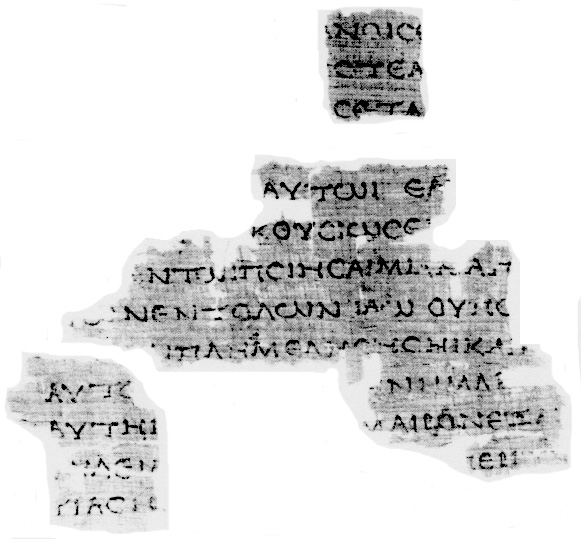
«The first stage [of the development of the divine names in Greek Bible manuscripts] is represented by 4Q LXXLevb, dated  by  C. H. Roberts to the late 1st cent. B.C. or the opening years of the 1st cent. A.D. It has, in Lev 4:27, the unmistakable reading εντολων Ιαω; at Lev 3:12 the final omega  and enough of the preceding alpha are present in the fragments to preclude any other reading there. The four broken papyrus columns within which this occurs reconstruct well throughout with the same reading of the divine name (sometimes with the appropriate Greek article to introduce it). The hand of this scroll has from the first reminded all observers of the best represented hand in P. Fouad Inv. 266  in Cairo (to be discussed below). The latter is the earlier scroll, still in the 1st cent. B.C. The priority here assigned to the Qumran fragments is typological: the MS which allows for the pronunciation, or at least a pronounceable and normal writing, of the Yhwh name in the same hand employed for the rest of the text, derives from a period of LXX transmission prior to all texts which in written form warn against utterance of the Name.»


«Το πρώτο στάδιο [της εξέλιξης των θεϊκών ονομάτων στα ελληνικά Βιβλικά χειρόγραφα] αντιπροσωπεύεται από το χειρόγραφο 4Q LXXLevb, το οποίο χρονολογείται από τον C. H. Roberts στα τέλη του 1ου αι. π.Χ. ή στα πρώτα χρόνια του 1ου αιώνα μ.Χ. Περιέχει, στο Λευιτικό 4:27, την αδιαμφισβήτητη ανάγνωση εντολων Ιαω· στο Λευιτικό 3:12 το τελικό ωμέγα και αρκετό από το άλφα που προηγείται υφίστανται στα σπαράγματα ώστε να αποκλείσουν οποιαδήποτε άλλη ανάγνωση εκεί. Οι τέσσερις αποσπασματικές στήλες του παπύρου όπου περιέχεται μπορούν όλες να ανασυντεθούν καλά με την ίδια ανάγνωση του θεϊκού ονόματος (ορισμένες φορές με το κατάλληλο ελληνικό άρθρο για να το εισάγει). Το χέρι γραφής αυτού του ρόλλου υπενθύμισε εξαρχής σε όλους τους παρατηρητές το καλύτερο αντιπροσωπευτικό χέρι γραφής στον Π[άπυρο] Φουάντ, Αρ. Καταλόγου 266, στο Κάιρο (ο οποίος θα εξεταστεί στη συνέχεια). Πρόκειται για αρχαιότερο ρόλλο, και πάλι εντός του 1ου αι. π.Χ. Η προτεραιότητα που αποδίδεται εδώ στα σπαράγματα του Κουμράν είναι τυπολογική: το χειρόγραφο που επιτρέπει την προφορά, ή τουλάχιστον μια κανονική γραφή που μπορεί να προφερθεί, του ονόματος Ιχβχ στο ίδιο χέρι γραφής που χρησιμοποιήθηκε και για το υπόλοιπο κείμενο, παράχθηκε σε μια περίοδο μεταβίβασης της Ο' που προηγείτο από όλα τα κείμενα τα οποία σε γραπτή μορφή προειδοποιούσαν κατά της προφοράς του Ονόματος».


* Patrick W. Skehan,
"The Divine Name at Qumran, in the Masada Scroll, and in the Septuagint"
[«Το Θεϊκό Όνομα στο Κουμράν, στο Ρόλλο της Μασάδας και στην Εβδομήκοντα»],
The Bulletin of the International Organization of Septuagint and Cognate Studies 13 (1980),
pp./σσ. 28, 29.

[English/Αγγλικά PDF]


MS image source/Πηγή εικόνας χειρογράφου:
ccat.sas.upenn.edu

Wednesday, August 4, 2010

Major titles of messianic/intermediary between God and man figures
in 2nd Temple Judaism /
Κύριοι τίτλοι μεσσιανικών/διάμεσων μεταξύ Θεού και ανθρώπων μορφών
στον Ιουδαϊσμό του 2ου Ναού


«Three of the major titles, "Lord", "Messiah" and "Son of God", have a significant Jewish background. "Lord" had a very wide range, running from the equivalent of the English "sir" up to the designation of God. It was occasionally used at the bottom end of its range to address the historical Jesus. The early formula maranatha, "Come, Lord" (1 Cor 16.22), illustrates how easily the content of the term could slide upwards if the community did no more than continue to address Jesus, now that they believed him to be in heaven. Angels are similarly addressed in Jewish texts (e.g. Zech 4.4-5).

The term "messiah", or "anointed", though not yet a full title, was already used with reference to both the expected Davidic king and the expected Levirical priest, and it was more broadly used with reference to prophets. For example, after a lengthy description of the Davidic king, Psalms of Solomon 17.32 calls him "the Lord's anointed" or "the Lord's messiah", while the Qumran community waited for the coming of "the messiahs of Aaron and Israel" (1QS IX, 11). The term itself was thus already present in Jewish culture to be applied to Jesus. The crystallisation of messianic expectation into a single figure, together with the absence of other anointed figures in the immediate environment, appear to have been the only necessary conditions required for the emergence of the title "the Messiah". This took place in rabbinical Judaism as well as in early Christianity.

"Son of God" was already in use by occasional outsiders during the historical ministry to indicate an exceptional human being. Jewish parallels include its use of wise and righteous individuals. For example, Jesus son of Sirach exhorts, "be like a father to orphans, and be in place of a husband to widows; then God will call you 'son', be gracious to you and save you from destruction" (Sir 4.10). The most striking example is rabbinical in date, though it says nothing that could not have been said in Judaism at the time of Jesus: "The whole universe is sustained on account of my son Hanina, and my son Hanina is satisfied with a kab of carobs from one Sabbath eve to another" (bT Taan 24b/bT Ber 17b/bT Hull 86b). Interpreted in isolation, this might create the impression that Hanina was the son of God in a special or even unique sense, but its cultural context dictates the interpretation that Hanina, being a son of God like so many other people, is being singled out for especial praise, not ontological uniqueness. The same applies to the patriarch Joseph, who is described in Joseph and Asenath as the first-born son of God (18.11; 21.4). Pre-Christian examples of people singled out as son of God include Levi and a Hasmonean king (T.Levi 4.2; 4Q ps-Dan).

Some beings seem to be of almost divine status. At Wisdom of Solomon 7.21ff, Wisdom is described in such terms. In 11Q Melchizedek, Old Testament passages containing two of the words for God (El at Ps 7.8-9, and Elohim at Ps 82.1) are interpreted of Melchizedek. Both Elim and Elohim are used with reference to angels in 4Q Shir Shabb. Philo describes Moses as "God and king of the whole nation" (Life of Moses, I, 158), and the logos as "the second God" (Qu in Gen II, 62). At 3 Enoch 12.3-5, God crowns Metatron, who is enthroned in heaven, and calls him "The lesser YHWH".»

«Τρεις από τους κύριους τίτλους, "Κύριος", "Μεσσίας" και "Γιος του Θεού", έχουν ένα σημαντικό ιουδαϊκό υπόβαθρο. Ο όρος "Κύριος" είχε ένα πολύ ευρύ φάσμα σημασιών, ξεκινώντας από το ισοδύναμο του  "κύριος" και φτάνοντας μέχρι τον προσδιορισμό του Θεού. Περιστασιακά χρησιμοποιήθηκε η κατώτερη έννοια αυτού του φάσματος για να προσφωνηθεί ο ιστορικός Ιησούς. Η πρώιμη διατύπωση μαραναθά, "Έλα, Κύριε" (1Κο 16:22), απεικονίζει πόσο εύκολα το περιεχόμενο του όρου θα μπορούσε να αναβαθμιστεί αν η κοινότητα δεν έκανε τίποτα περισσότερο από το να συνεχίσει να προσφωνεί έτσι τον Ιησού, όταν πλέον πίστευαν ότι εκείνος βρισκόταν στον ουρανό. Οι άγγελοι προσφωνούνται παρόμοια σε ιουδαϊκά κείμενα (π.χ. Ζαχ 4:4, 5).

Ο όρος "μεσσίας", ή "χριστός", μολονότι ως τότε δεν είχε γίνει πλήρης τίτλος, χρησιμοποιούνταν ήδη αναφορικά τόσο με τον αναμενόμενο δαβιδικό βασιλιά όσο και με τον αναμενόμενο λευιτικό ιερέα, και χρησιμοποιούνταν με μια πιο ευρεία έννοια αναφορικά με τους προφήτες. Για παράδειγμα, μετά από μια μακροσκελή περιγραφή του δαβιδικού βασιλιά, οι Ψαλμοί Σολομώντα 17:32 τον αποκαλούν "ο χριστός του Κυρίου" ή "ο μεσσίας του Κυρίου", ενώ η κοινότητα του Κουμράν ανέμενε την έλευση "των μεσσιών του Ααρών και του Ισραήλ". (1QS IX, 11) Συνεπώς, ο όρος καθαυτός υφίστατο ήδη στην ιουδαϊκή κουλτούρα ώστε να εφαρμοστεί στον Ιησού. Η αποκρυστάλλωση της μεσσιανικής προσμονής σε ένα και μοναδικό πρόσωπο, μαζί με την απουσία άλλων χρισμένων προσώπων στο άμεσο περιβάλλον, φαίνεται ότι αποτέλεσαν τις μόνες απαραίτητες συνθήκες που απαιτήθηκαν για την εμφάνιση του τίτλου "ο Μεσσίας". Αυτό έλαβε χώρα στον ραβινικό Ιουδαϊσμό καθώς επίσης και στον πρώιμο Χριστιανισμό.

Ο όρος "Γιος του Θεού" ήταν ήδη σε χρήση από περιστασιακές εξωτερικές πηγές κατά τη διάρκεια της ιστορικής διακονίας [ενν. του Ιησού] για να υποδείξει ένα εξαιρετικό ανθρώπινο ον. Ιουδαϊκά παράλληλα περιλαμβάνουν τη χρήση του αναφορικά με σοφά και δίκαια άτομα. Για παράδειγμα, ο Ιησούς ο γιος του Σειράχ παροτρύνει: "Γίνε σαν πατέρας στα ορφανά, και σαν σύζυγος στη μητέρα τους· και θα γίνεις σαν γιος του Υψίστου [...]". (Σειρ 4:10) Το πιο εντυπωσιακό παράδειγμα ανήκει στη ραβινική περίοδο, μολονότι δεν λέει τίποτα το οποίο δεν θα μπορούσε να λεχθεί από τον Ιουδαϊσμό της εποχής του Ιησού: "Όλο το σύμπαν διατηρείται για χάρη του γιου μου Ανίνα, και ο γιος μου ο Ανίνας είναι ικανοποιημένος με ένα κάρο χαρούπια από το ένα απόγευμα Σαββάτου ως το επόμενο". (bT Taan 24b/bT Ber 17b/bT Hull 86b) Αν ερμηνευθεί απομονωμένο, αυτό θα μπορούσε να δημιουργήσει την εντύπωση ότι ο Ανίνας ήταν ο γιος του Θεού με μια ειδική ή ακόμη και μοναδική έννοια, αλλά τα πολιτισμικά συμφραζόμενά του υπαγορεύουν την ερμηνεία ότι ο Ανίνας, όντας γιος του Θεού όπως τόσοι άλλοι άνθρωποι, ξεχωρίζεται για ιδιαίτερο έπαινο και όχι για οντολογική μοναδικότητα. Το ίδιο ισχύει και για τον πατριάρχη Ιωσήφ, ο οποίος περιγράφεται στο Ιωσήφ και Ασενέθ ως ο πρωτότοκος γιος του Θεού (18:11· 21:4). Προχριστιανικά παραδείγματα ατόμων που ξεχωρίστηκαν ως γιοι του Θεού περιλαμβάνουν τον Λευί και τον Ασμοναίο βασιλιά. (T.Levi 4:2· 4Q ps-Dan)

Κάποια όντα φαίνεται να κατέχουν ουσιαστικά θεϊκή υπόσταση. Στη Σοφία Σολομώντα 7:21 υποσημ., η Σοφία περιγράφεται με τέτοιους όρους. Στο 11Q Μελχισεδέκ, τα αποσπάσματα της Παλαιάς Διαθήκης που περιέχουν δύο από τις λέξεις που αποδίδονται με τον όρο Θεός (Ελ στο Ψαλ 7:8, 9· και Ελοχίμ στο Ψαλ 82:1) ερμηνεύονται για τον Μελχισεδέκ. Τόσο ο όρος Ελίμ όσο και ο όρος Ελοχίμ χρησιμοποιούνται αναφορικά με αγγέλους στο 4Q Shir Shabb. Ο Φίλωνας περιγράφει τον Μωυσή ως "θεό και βασιλιά όλου του έθνους" (Περί του Βιου Μωυσέως 1:158), και το λόγο ως "τον δεύτερο Θεό" (Σχολιολόγιο στη Γένεση 2:62). Στο 3 Ενώχ 12:3-5, ο Θεός στέφει τον Μέτατρον, ο οποίος είναι ενθρονισμένος στον ουρανό, και τον αποκαλεί "ο κατώτερος ΙΧΒΧ"».


Σημ. Ο όρος "Son of God" αποδίδεται κατά συνέπεια ως "Γιος του Θεού" αντί του συνηθέστερου terminus technicus "Υιός του Θεού" βάσει του συλλογισμού ότι και ο Πατέρας Θεός δεν θα αποδιδόταν αντίστοιχα "Πατήρ" (γεν. "του Πατρός") αλλά "Πατέρας" (γεν. "του Πατέρα").

* Maurice Casey,
From Jewish Prophet to Gentile God: The Origins and Development of New Testament Christology
[Από τον Ιουδαίο Προφήτη στον Εθνικό Θεό: Οι Απαρχές και η Ανάπτυξη της Χριστολογίας της Καινής Διαθήκης],
Westminster/John Knox Press, 1991,
p./σ. 79.