 |
| alfavita.gr, Ο διαχρονικός έλεγχος των πολιτικών φρονημάτων των Δημοσίων Υπαλλήλων |
Showing posts with label ΕΘΝΙΚΙΣΜΟΣ. Show all posts
Showing posts with label ΕΘΝΙΚΙΣΜΟΣ. Show all posts
Saturday, March 1, 2014


Saturday, August 31, 2013
Being a good American
without saluting the flag /
Όντας καλός Αμερικανός
χωρίς να χαιρετάς τη σημαία
without saluting the flag /
Όντας καλός Αμερικανός
χωρίς να χαιρετάς τη σημαία
 |
| * |
Cases having to do with military combat service were not the only ones that raised issues of conflict between persons of faith and the state during wartime. Others mixed free exercise concerns with subtle ways common practice seemed to promote religion and thus hint at a religious establishment. During the ear of World War II, the group known as Jehovah’s Witnesses became a symbol for this web of considerations. From their beginnings in the later nineteenth century, the Jehovah’s Witnesses had regarded all human government as a tool of Satan at worst, a necessary evil at best. Regardless, no Witness would as a matter of faith pledge loyalty to any government in a way that would seem to defy one’s absolute loyalty to God. When what became the Pledge of Allegiance to the American flag first appeared in a youth magazine in 1892, it lacked both the phrase “under God” and the imprimatur of the government. As World War II loomed, however, Congress enacted legislation mandating the population to salute the flag, and school districts across the nation began requiring all children to begin the school day with patriotic exercises that included recitation of the pledge to the flag. Although many objected on religious grounds, the Jehovah’s Witnesses gained national attention in the mid-1930s when more than 100 children were expelled from schools in Pennsylvania for refusing on religious grounds to salute the flag. By 1938, lower courts generally affirmed the right of these children to refrain from saluting the flag on religious grounds, but in 1940 the US Supreme Court ruled against them, noting in the majority opinion that the flag was a symbol of national unity, a secular matter rather than a religious one, and those who failed to salute it represented a dangerous threat to the nation. Much controversy ensued since those who disagreed with the decision believed the Court transformed a matter of religious belief and practice into a political weapon and thus denied Witnesses and others the right to free exercise of their faith. Three years later, however, in a similar case, the Court affirmed the right of citizens to refrain from saluting the flag should religious convictions prohibit them from doing so. In retrospect, the earlier cases were as much about promoting a sense of national unity and common identity as the Nazi menace loomed on the horizon; by the later decision in 1943, the tide was turning in World War II, and it was clear that groups like the Witnesses and others who had religious reservations about taking political oaths of any kind were really no threat to national security at all. One could be a good American and not salute the flag if that action contradicted one’s ultimate allegiance to God alone.
* Amanda Porterfield & John Corrigan (eds.),
Religion in American history,
Wiley-Blackwell, 2010,
pp. 259, 260.

Sunday, June 16, 2013
Εισηγήσεις
του Ιωάννη Καρμίρη
στην Ακαδημία Αθηνών /
Ioannes Karmires announcements
at the Academy of Athens
του Ιωάννη Καρμίρη
στην Ακαδημία Αθηνών /
Ioannes Karmires announcements
at the Academy of Athens

* Η σωτηρία των εκτός της Εκκλησίας ανθρώπων του Θεού
* Περί του διαλόγου της Ορθοδόξου Εκκλησίας μετά των ετεροδόξων
* Περί το πρόβλημα της λεγομένης "Λουκαρείου" Ομολογίας
* Η περί σωτηρίας διδασκαλίας του Μεγάλου Βασιλείου
* Η Ορθόδοξος Εκκλησία εν διαλόγω μετά των ετεροδόξων εκκλησιών
* Ο εθνικισμός εν τη Ορθοδόξω Εκκλησία
* Η δευτέρα οικουμενική σύνοδος επί τη 1600στή επέτειο αυτής
* Η θέσις και η διακονία των λαϊκών εν τη Ορθοδόξω Εκκλησία
* Το πρόβλημα της ιερωσύνης των γυναικών
Friday, May 31, 2013
Με αφορμή
τις κωδωνοκρουσίες των Καλαβρύτων:
Υπάρχει ορθόδοξος εθνικισμός;
του Ευστάθιου Χ. Λιανού Λιάντη /
Is there an Orthodox nationalism?
τις κωδωνοκρουσίες των Καλαβρύτων:
Υπάρχει ορθόδοξος εθνικισμός;
του Ευστάθιου Χ. Λιανού Λιάντη /
Is there an Orthodox nationalism?

Ανιχνεύοντας την ιδεολογική παραφθορά
του χριστιανικού μηνύματος
του Ευστάθιου Χ. Λιανού Λιάντη
και είπε Κύριος· τί πεποίηκας;
φωνή αίματος του αδελφού σου βοά προς με εκ της γηςΓεν. 4:10
Τζέικομπ Λώρενς,
από τη σειρά «Μετανάστευση», 1940-1941
Στην Ορθόδοξη Ανατολική Εκκλησία υφίσταται ένα παραγνωρισμένο χαρακτηριστικό, το οποίο μπορεί να δώσει την απάντηση στην αποδοχή ή την απόρριψη του εθνικισμού από το σώμα της. Αυτό είναι η εκκλησιολογική τεκμηρίωση της αγιότητας των ονομαζόμενων «στρατιωτικών αγίων», μιας αγιολογικής κατηγορίας, η οποία, παρά τις προσπάθειες αλλοτρίωσης της ταυτότητάς της από τους κρατικούς θεσμούς, παραμένει η πλέον επαναστατική και αντιεξουσιαστική. Οι άγιοι Γεώργιος, Δημήτριος, Σεβαστιανός, για να αναφερθούμε μόνον στους επιφανέστερους, δεν ήταν στρατιωτικοί που έπεσαν υπερασπιζόμενοι τη Ρωμαϊκή Αυτοκρατορία· ήταν αξιωματικοί που διακήρυξαν τη χριστιανική τους πίστη, αρνούμενοι την αυτοκρατορική/εθνική λατρεία και την κρατική θρησκευτική πολιτική. Έτσι, ήλθαν αντιμέτωποι με την εξουσία, που τους επέβαλε μαρτυρικό θάνατο. Την καθοριστική τους μάχη την έδωσαν μη μαχόμενοι, ενώ τη στιγμή του θανάτου στάθηκαν άοπλοι, «άδοξοι» για την εγκόσμια «εν όπλοις» δόξα.
Όταν η αυτοκρατορία έγινε χριστιανική, τέθηκε το ζήτημα της ιερότητας των πολέμων, που διεξήγαγε, και ζητήθηκε από την Εκκλησία η αναγνώριση ως αγίων των στρατιωτών οι οποίοι έχαναν τη ζωή τους πολεμώντας υπό τα λάβαρα του χριστιανού αυτοκράτορα. Όμως, η βυζαντινή θεολογία γνώριζε τα όρια των περιχωρήσεων των θεσμών. Η απάντηση της συνόδου του Πατριαρχείου στον αυτοκράτορα Νικηφόρο Φωκά, ήταν: «Πώς αυτοί που φονεύουν και φονεύονται στους πολέμους θα μπορούσαν να λογισθούν μάρτυρες ή εφάμιλλοι των μαρτύρων, όταν οι θείοι κανόνες τους επιβάλουν επιτίμιο, εμποδίζοντάς τους για τρία χρόνια από την ιερή μετάληψη;». Κανένας πόλεμος για τη βυζαντινή Εκκλησία δεν μπορούσε να είναι ιερός, διότι αυτό θα αλλοίωνε την καθαυτή υπόστασή της ως Εκκλησία του Χριστού. Ο πόλεμος, ο διαχωρισμός των ανθρώπων σε έθνη και η αντιπαλότητά τους είναι χαρακτηριστικά του «κόσμου τούτου». Και οι ιεράρχες θεολόγοι της εποχής δεν λησμονούσαν ότι ακόμη κι αν βρίσκονταν εντός του κόσμου, και αναγκάζονταν σε συμβιβασμούς, δεν ανήκαν σ’ αυτόν· «εκ του κόσμου ουκ εισίν καθώς εγώ εκ του κόσμου ουκ ειμί» Ιω. 17:16.
Σήμερα οι ορθόδοξοι αρχιερείς φέρουν αμφίεση παρόμοια μ’ εκείνη του βυζαντινού αυτοκράτορα· ένα τυπολογικό ιδίωμα που διατηρείται προκειμένου να επισημανθεί η νοητή συνέχεια της Χριστιανικής Αυτοκρατορίας της Ανατολής. Παρότι ο τύπος εμμένει, η ουσία επιλανθάνεται. Και τούτο δεν έχει να κάνει αποκλειστικά με τη θεολογία αλλά και με την «κοσμοθεωρία» της αυτοκρατορίας. Το Βυζάντιο ήταν πολυεθνικό και «υπερεθνικό» σε όλες τις κοινωνικές βαθμίδες. Αφομοίωνε και ενέτασσε λαούς όχι με εθνολογικούς αλλά με πολιτιστικούς όρους. Και οι «αλλοεθνείς» έφθαναν έως το ύπατο αξίωμα. Ο αρμενικής καταγωγής Ηράκλειος ήταν αυτός που θέσπισε ως επίσημη γλώσσα της αυτοκρατορίας την ελληνική. Τη δυναστεία του Ηρακλείου διαδέχθηκε η συριακή δυναστεία των Ισαύρων, για ν’ ακολουθήσουν οι Φρύγες του Αμορίου. Έναντι, λοιπόν, ποιας πολιτιστικής κληρονομιάς ή παράδοσης μπορεί ένας ιεράρχης να ιδεολογικοποιεί τον ρατσισμό, να προπηλακίζει τους μετανάστες ως ανεπιθύμητους, να μιλάει για εθνική καθαρότητα;
Ο μακαριστός Μητροπολίτης Κίτρους Βαρνάβας, ανάστημα κεφαλαιώδες για την Εκκλησία της Ελλάδος, αναρωτήθηκε κάποτε: «Πώς μπορούμε εγώ και ο αδελφός μου από την άλλη μεριά των συνόρων, ως ορθόδοξοι επίσκοποι, να ευλογούμε στρατεύματα, που αν χρειαστεί, θα διεξάγουν μια φονική μάχη μεταξύ τους;». Οι λόγοι αυτοί εκφράζουν την αναγκαία θεολογική ευαισθησία, το συνειδησιακό ενέργημα, του χριστιανού ποιμένα, ο οποίος αντιλαμβάνεται το σύνορο ως εμπόδιο της αδελφοσύνης. Εδώ έγκειται και η διαφορά, εκκλησιολογική και κανονική, της περιφεριοποίησης της εκκλησιαστικής διοίκησης, που υφίστατο από τους πρώτους χριστιανικούς αιώνες για την εξυπηρέτηση ποιμαντικών αναγκών με τον ψευδο-νεωτερικό εθνικό διαχωρισμό των Εκκλησιών.
Η πράξη του εθνικού διαχωρισμού συνιστά αίρεση για την Ορθόδοξη Εκκλησία σύμφωνα με τον Όρο της Αγίας και Μεγάλης Συνόδου (Κωνσταντινούπολη, 1872). Το κείμενο του Όρου αποκόπτει από το εκκλησιαστικό σώμα όσους πρεσβεύουν ή εφαρμόζουν εθνοφυλετικές αντιλήψεις και πρακτικές: «Αποκηρύττουμε, επικρίνοντας και καταδικάζοντας, τον φυλετισμό, δηλαδή τις φυλετικές διακρίσεις και τις εθνικές έριδες και φθόνους και διαιρέσεις στην Εκκλησία του Χριστού […]. Εκείνους που αποδέχονται αυτόν τον φυλετισμό και πάνω του τολμούν να θεμελιώνουν καινοφανείς φυλετικές παρασυναγωγές, τούς κηρύττουμε, σύμφωνα με τους Ιερούς Κανόνες, αποκομμένους από τη μία Αγία, Καθολική και Αποστολική Εκκλησία, και ως εκ τούτου σχισματικούς».
Η απάντηση, λοιπόν, στους ιερωμένους που σηκώνουν τα εθνικιστικά λάβαρα δεν είναι ότι δεν έχουν δικαίωμα να μιλούν γιατί είναι «εκκλησιαστικοί». Έχουν το δικαίωμα να εκφράζονται, όπως κάθε κοινωνική τάξη σε μια δημοκρατική χώρα. Η απάντηση, που οφείλει να δοθεί από τους προοδευτικούς φορείς, είναι ότι αυτές οι θέσεις τους είναι απροκάλυπτα αντιχριστιανικές και τους καθιστούν υπόλογους στην ίδια την Εκκλησία. Ο Μέγας Βασίλειος χαρακτήριζε αυτούς τους επισκόπους «λύκους βαρείς, που διασπούν το ποίμνιο του Χριστού»· και είναι όντως «λύκοι βαρείς» όσοι εγκολπώνονται τον ρατσισμό, τη μισαλλοδοξία και τον ναζισμό, ειδικά όταν οι ίδιοι φέρουν εγκόλπιο με τη μορφή του Χριστού.
Ο Ευστάθιος Χ. Λιανός Λιάντης είναι θεολόγος και επιμελητής εκδόσεων
* Πηγή: Ενθέματα, 26 Μαΐου 2013.

Saturday, January 7, 2012
Jewish Christians
coping with the liberation wars
against Rome /
Οι Ιουδαίοι Χριστιανοί
αντιμέτωποι με τους απελευθερωτικούς πολέμους
εναντίον της Ρώμης
coping with the liberation wars
against Rome /
Οι Ιουδαίοι Χριστιανοί
αντιμέτωποι με τους απελευθερωτικούς πολέμους
εναντίον της Ρώμης
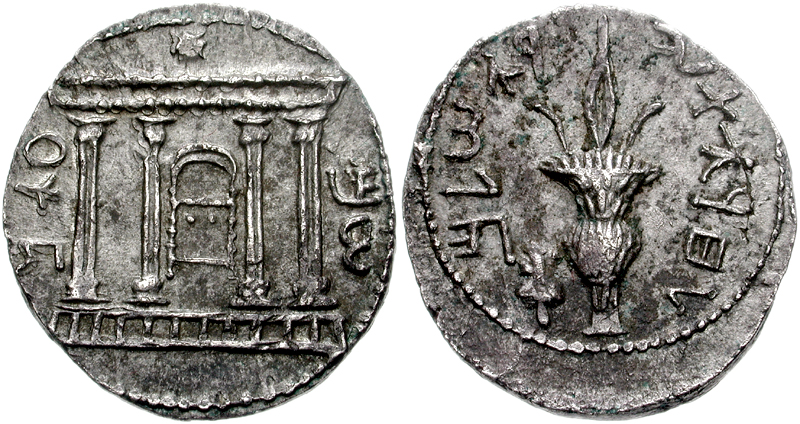 |
Bar Kokhba's tetradrachm. Obverse: the Jewish Temple facade with the rising star. Reverse: A lulav, the text reads: "to the freedom of Jerusalem" |
Jewish Christianity would have found it hard to cope with Jewish nationalism, and nationalist sentiments were strong among the Jews of Palestine in the first two centuries of the current era. It should be remembered that in this period the Palestinian Jews fought two disastrous wars of liberation against Rome (not to mention a number of abortive uprisings in the Diaspora). We have already referred to the First War [i.e. 70 C.E.] as a time of trouble for the Jewish Christians. The Second War [i.e. 135 C.E.] was probably equally disastrous for them, and their failure to support Bar Kokhba may have cost them dear. Nationalism was bound up with traditionalism (zeal for the Law) and attachment to the Land of Israel, and it easily took on messianic overtones.
Ο Ιουδαϊκός χριστιανισμός θα το είχε βρει δύσκολο να αντιμετωπίσει τον Ιουδαϊκό εθνικισμό, και τα εθνικιστικά αισθήματα ήταν ισχυρά μεταξύ των Ιουδαίων της Παλαιστίνης κατά τους πρώτους δύο αιώνες της τρέχουσας χρονολογίας. Δεν θα πρέπει να λησμονείται ότι κατά την περίοδο αυτή οι Παλαιστίνιοι Ιουδαίοι διεξήγαγαν δύο καταστροφικούς απελευθερωτικούς πολέμους εναντίον της Ρώμης (για να μην αναφερθούν ένα πλήθος ανεπιτυχών εξεγέρσεων στη Διασπορά). Αναφερθήκαμε ήδη στον Πρώτο Πόλεμο [ενν. του 70 Κ.Χ.] ως μια περίοδο ταλαιπωριών για τους Ιουδαίους χριστιανούς. Ο Δεύτερος Πόλεμος [ενν. του 135 Κ.Χ.] ήταν πιθανότατα εξίσου καταστροφικός για αυτούς, και το γεγονός ότι δεν υποστήριξαν τον Μπαρ Κοχμπά θα τους κόστισε αρκετά. Ο εθνικισμός ήταν αλληλένδετος με την παραδοσιαρχία (ζήλος για τον Νόμο) και την προσκόλληση στη Γη του Ισραήλ, και εύκολα έλαβε μεσσιανικές προεκτάσεις.
* Philip S. Alexander,
'The Parting of the Ways' from the Perspective of Rabbinic Judaism
["Ο Αποχωρισμός" από την Προοπτική του Ραβινικού Ιουδαϊσμού],
in/στο:
James D. G. Dunn (ed.),
Jews and Christians: the parting of the ways, A.D. 70 to 135
[Ιουδαίοι και Χριστιανοί: ο αποχωρισμός τους, 70 ως 135 μ.Χ.],
Wm. B. Eerdmans Publishing, 1992,
p./σ. 22.

Monday, April 25, 2011
Το θρησκευτικό & ιδεολογικό υπόβαθρο
του Βουλγαρικού κόμματος VMRO
(ВМРО: Българско национално движение)
που επιτέθηκε βάναυσα
σε Χριστιανική σύναξη στο Μπουργκάς /
The religious & ideological background
of the Bulgarian VMRO party
that attacked brutally
a Christian gathering at Burgas
του Βουλγαρικού κόμματος VMRO
(ВМРО: Българско национално движение)
που επιτέθηκε βάναυσα
σε Χριστιανική σύναξη στο Μπουργκάς /
The religious & ideological background
of the Bulgarian VMRO party
that attacked brutally
a Christian gathering at Burgas


* Christo Ivanov & Margarita Ilieva, "Bulgaria",
in/στο
Racist extremism in Central and Eastern Europe
[Ρατσιστικός εξτρεμισμός στην Κεντρική και Ανατολική Ευρώπη]
(Cas Mudde ed.),
Routledge, 2005,
pp./σσ. 4, 5.

Friday, March 4, 2011
The Lausanne convention (1923):
A decisive factor
for an Orthodox Christian Greece & a Muslim Turkey
in modern times /
Συνθήκη της Λωζάνης (1923):
Ένας καθοριστικός παράγοντας
για μια Ορθόδοξη Χριστιανική Ελλάδα & μια Μουσουλμανική Τουρκία
στη σύγχρονη εποχή
A decisive factor
for an Orthodox Christian Greece & a Muslim Turkey
in modern times /
Συνθήκη της Λωζάνης (1923):
Ένας καθοριστικός παράγοντας
για μια Ορθόδοξη Χριστιανική Ελλάδα & μια Μουσουλμανική Τουρκία
στη σύγχρονη εποχή
The agreement to make a formal separation between the populations of Greece and Turkey, through a two-way process of deportation, sent a convulsion through the region and the world when it was announced, tentatively in December 1922 and definitively the following month. There was undeniably a certain cold, deadly logic about it. New borders were being drawn, economic assets were being reallocated, and as a natural consequence, people were being divided up as well. Henceforth, it was determined, Greece would be an almost entirely Orthodox Christian country, while in Turkey, the overwhelming majority of citizens would be Muslim. Anybody who lived in the 'wrong' place, from the viewpoint of religion, would be deported across the Aegean to start a new life in the 'right' country. It was a natural move, in the sense that the atrocities and humanitarian disasters of the past few months, the war of the past three years, and the economic and social changes of the past century, all seemed to point in that direction; and at the same time, it was profoundly unnatural.
The terms of the divorce were laid down in the grim words of a convention signed on 30 January 1923 at the conference in Lausanne, where a triumphant Turkey, an exhausted Greece and the leading world powers had gathered to map out the future of a volatile region then known as the Near East. The conference, which did not conclude for another six months, was intended to put an end to a decade of continuous warfare and, from Turkey's point of view, to consolidate in the diplomatic arena the hard-won gains of the battlefield.
Article One of the Lausanne convention reads as follows:... There shall take place a compulsory exchange of Turkish nationals of the Greek Orthodox religion established in Turkish territory, and of Greek nationals of the Muslim religion established in Greek territory. These persons shall not return to live in Turkey or Greece without the authorization of the Turkish government or of the Greek government respectively.
[...] In the Ottoman system, spiritual affiliation had served as by far the most significant distinction between the subjects of the Sultan. It made a huge difference to your life whether you were an Ottoman Muslim, an Ottoman Orthodox Christian or an Ottoman Jew. This determined how much tax you would pay, what role you would play in public life and by what law you would be judged. Because the empire was organized as a Muslim theocracy, it expected its non-Muslim subjects to behave, as it were, theocratically; in other words, to organize themselves into religious groups where the spiritual leader also doubled as head of the community, and could answer to the Sultan for the behaviour of his flock. In stressing the primacy of religion, the Ottoman authorities were to some extent following the precedent set by the Byzantine theocracy, as well as Islam's own theocratic tradition. In any case, at least in its classic form, the Ottoman system did not distinguish between its subjects by virtue of their speech or customs or beliefs about their own 'national' origins. An Ottoman Muslim might speak Serbian, Arabic, Albanian or Turkish; it made no difference to that person's status in the eyes of his rulers.
By the end of the Ottoman era that was changing; religion was giving way to 'nation' as the main source of identity and affiliation. When the Ottoman theocracy was at its height, the Greek-dominated Patriarchate of Constantinople, which was an important agency of the imperialregime, enjoyed huge influence over all the Orthodox Christians of the empire; but in the 19th century, as the intensity of ethnic consciousness increased, new religious authorities were created or revived by the Slavs and Arabs in particular, which were identical to the Greek Patriarchate in doctrine but gave expression to a different national identity. Formally speaking, the bitter conflict which raged in Ottoman Macedonia at the end of the 19th century was between the bishops of the Greek and Bulgarian hierarchs of the Orthodox church; but this was not so much a religious war as a war over national identity in religious disguise.
In most parts of the Ottoman empire, as in most other places that were either in Europe or influenced by European ideas, the elite had been infiltrated by a new doctrine, that of modern nationalism. This was a theory which aspired to supplant religion as the main category by which people defined themselves, and was itself something akin to a religion in its claim to explain and guide human behaviour, and to deal in eternally valid truths.
[Διπλά Ξένος: Πώς Διαμόρφωσε τη Σύγχρονη Ελλάδα και Τουρκία η Μαζική Εκδίωξη],Harvard University Press, 2006,
pp./σσ. 11, 14, 15.
Βιβλιοκριτική:Κύριλλος Νικολάου,
Βιβλιοπαρουσίαση: Οι ανταλλαγές πληθυσμών ανάμεσα στην Ελλάδα και την Τουρκία,
Ενημερωτικό Δελτίο ΑΩ του Συνδέσμου Υποτρόφων του Ιδρύματος Ωνάση (onassis.gr), Σεπτέμβριος 2007.


Subscribe to:
Posts (Atom)