


 |
Emperor Jovian ordered the burning down of the library of Antioch (Suidae Lexicon): Τhis temple had been made into a library by Julian for a eunuch named Theophilus, but Jovian burnt it down along with all its books, and the concubines themselves set the fire as a joke. But the Antiochians got upset with the emperor and threw out some of the scrolls onto the ground so that whoever wanted could pick one out and read it, but they attached other scrolls to the walls. / Ο αυτοκράτορας Ιοβιανός διέταξε την πυρπόληση της βιβλιοθήκης της Αντιόχειας (Λεξικό Σουίδα): Παρὰ δὲ τοῦ Ἰουλιανοῦ κατασταθέντα βιβλιοθήκην εὐνούχῳ τινὶ Θεοφίλῳ, κατέφλεξε σὺν πᾶσιν οἷς εἶχε βιβλίοις, αὐτῶν τῶν παλλακίδων ὑφαπτουσῶν μετὰ γέλωτος τὴν πυράν. Οἱ δὲ Ἀντιοχεῖς ἠγανάκτησαν κατὰ τοῦ βασιλέως καὶ τὰ μὲν ἀπέρριπτον τῶν βιβλίων ἐς τὸ ἔδαφος, ὥστε ἀναίρεσθαι τὸν βουλόμενον καὶ ἀναγινώσκειν, τὰ δὲ τοῖς τοίχοις προσεκόλλιζον. |
«Την καταστροφική αυτή ζέση [ενν. την πυρπόληση βιβλίων] την επιφύλασσαν [ενν. οι ορθόδοξοι χριστιανοί] συνήθως για τα έργα ομοπίστων τους χριστιανών που είχαν παρεκτραπεί σε αιρέσεις, και πραγματικά αναφέρονται στις πηγές πολλές τελετουργικές πυρπολήσεις βιβλίων τον τέταρτο και τον πέμπτο αιώνα».
* L. D. Reynolds & N. G. Wilson,
Αντιγραφείς και Φιλόλογοι, Το ιστορικό της παράδοσης των κλασικών κειμένων,
μετάφρ. Νικ. Παναγιωτάκη,
Μορφωτικό Ίδρυμα Εθνικής Τραπέζης, 2001,
σ. 68.
«Such destructive fervour [i.e. burning books] was usually reserved [i.e. by the orthodox Christians] for the works of fellow Christians who had deviated into heresy, and several ceremonial bonfires of unorthodox books are recorded in the fourth and fifth centuries.»
* L. D. Reynolds & N. G. Wilson,
Scribes and Scholars, A guide to the transmission of Greek & Latin literature,
Oxford University Press, 1991,
p. 50.
 * Frank Moore Cross, Jr. & David Noel Freedman,
«DISCIPLINE FOR THOSE WHO HAVE FALLEN AWAYReligious groups have long practiced forms of internal discipline for members who have strayed. Within the early Christian tradition, discipline could involve public abasement or exclusion from the Christian community. Relying in part on biblical passages, a few groups continue to practice particularly rigorous forms of discipline and exclusion, revealing wrongs publicly and avoiding excommunicated former members to a much greater degree than they avoid other nonmembers. As Carl Esbeck summarizes [Carl H. Esbeck, "Tort Claims against Churches and Ecclesiastical Officers: The First Amendment Considerations", 89 West Virginia Law Review 1 (1986-1987), pp. 40-62] the view of Menno Simons, “[T]hose who are excommunicated are to be avoided completely, not merely treated as strangers.”
Shunning of Insiders
When members of a religious group together avoid contacts with a member or former member, the practice is usually called shunning. Even though any individual is free legally to avoid contacts with another individual, people who organize together to refrain from contact may commit a civil wrong. In many states, organizing a boycott of a business is a tort. In regard to marriage, even one person’s urging another to avoid contact with his spouse may constitute a civil wrong. And whether or not shunning amounts to a more specific tort, a shunned person may claim he has suffered the intentional or reckless infliction of emotional distress.
For the churches that isolate members who stray, including groups in the Mennonite tradition and Jehovah’s Witnesses, shunning aims at repentance and restoration, increasing the offender’s shame and preventing the faithful from becoming contaminated. In some modern churches, all members shun their former associates in business and social affairs, and married partners avoid both physical and social contact with wayward spouses. Those joining churches whose discipline includes shunning usually are aware of the practice from the outset.
Courts considering complaints that religious shunning is wrongful may adopt one of three broad approaches. They may treat religious motivation as irrelevant, as did Employment Division v. Smith; they may turn religiouspractice into a virtually absolute defense; or they may somehow weigh religious practice against public need. Whatever the precise import of Smith in respect to religious shunning, common-law doctrines that forbid it can burden corporate religious life. For this reason, state courts, by common-law or constitutional interpretation, should impede shunning of members and former members by religious groups only if the government establishes a strong interest in doing so.
Various state decisions support this conclusion, but reach divergent practical results. In 1975, the Supreme Court of Pennsylvania, although using compelling interest language then embodied in the federal constitutional standard, took a view favorable to the shunned former member. Church officials argued that even if Mr. Bear’s claims that he was shunned by church members, including his wife, were all true, the Free Exercise Clause provided a complete defense. The court responded that “the shunning may be an excessiveinterference within areas of ‘paramount’ state concern, i.e. the maintenance of marriage and family relationship, alienation of affection, and the tortious interference with a business relationship.” The court’s opinion implied that the state’s interests against shunning were powerful enough to allow Bear to recover if he could show at trial that church officials had acted as he asserted.
In 1987, the Court of Appeals for the Ninth Circuit also used compelling interest language but reached substantively different conclusions. Paul, who had been “disfellowshipped” [sic] from the Jehovah’s Witnesses, claimed he had suffered emotional disturbance, alienation of affections, and harm to reputation. The Ninth Circuit said, “We find the practice of shunning not to constitute a sufficient threat to the peace, safety, or morality of the community as to warrant state intervention.” It continued, “Intangible or emotional harms cannot ordinarily serve as a basis for maintaining a tort cause of action against a church for its practices—or against its members.” The Alaska Supreme Court, in 2001, quoted from Paul and determined that the emotional harm to an individual from shunning “as such is not a threat to the public.”
The Bear and Paul courts diverged over a fundamental issue: Does the state have a compelling interest in the quality of life of a few individual adult members of society, when any impairment will have only a slight influence on the larger culture? Without doubt, protecting a few individuals can constitute a compelling interest, in American legal understanding. When the lives of children are at stake, courts may require medical procedures their parents do not want, a topic we take up in chapter 21. And Yoder assumes that educational impoverishment of even a few children is something the state can avoid. But what about adults who suffer harms less severe than death or bodily injury?
That shunning can be truly devastating for the individuals who suffer it is a reason for the state to intervene. But the fact that individuals separately are undoubtedly free to do what their leaders encourage them to do together casts doubt on whether the encouragement should lead to liability. Shunning differs from physical assault, slander, and other torts that are wrong even if committed by an isolated individual. That the wrongs committed by shunning do not impinge on vital state interests is shown by the infrequency of recovery for group boycotts that are not motivated by economic gain, and by the widespread abolition of recovery for alienation of a spouse’s affections.
At least when adults have voluntarily become members of a religious group that they know engages in shunning, the state lacks a compelling state interest in protecting them from the financial and emotional consequences of that practice. It is not that their joining the group binds them legally to accept any penalties the group may inflict, or eliminates the state’s interest in their welfare vis-a`-vis that of the group. Rather, their voluntary acceptance of membership reduces the urgency of the state’s interest, so that it does not override the group’s fundamental freedom to exercise a form of religious practice whose historical pedigree is extensive, however unpalatable it may be to modern sensibilities.
Of course, shunning does reduce the freedom of individuals who face that sanction to practice religion as they see fit. A man aware that his family will shun him if he rejects the church has a powerful incentive to remain faithful, at least in outward appearance. Although this inhibiting effect is disturbing, most of a group should not have to forego what it believes is vital religious practice so that individual dissidents will have maximum freedom of choice at a particular moment.We need to remember that deciding what maximizes freedom over time is no simple exercise. Individuals may wish to join religious groups with strong cohesiveness and discipline. If the law undermines forms of discipline, as by forbidding shunning, it eliminates or erodes the liberty of individuals to join groups whose cohesiveness rests partly on stringent discipline. Within a liberal democracy, the government’s aim, as I have argued in the last chapter, should be to allow freedom of religious practice, not to encourage the religions that most recognize individual autonomy in the realm of religion. The law should not be designed to favor religious groups with little discipline over those with strong discipline.
Should a privilege to shun be limited to religious groups or extended to other groups? We could imagine that an organization devoted to political and social principles might feel so betrayed by a member that expulsion and shunning would seem an appropriate response. A group advocating animal rights might learn that a member continues to participate in fox hunting or to model fur clothing, for example. Although it may have more difficulty than a religious group in showing that shunning is related in some crucial way to its associational identity and purposes, a nonreligious expressive group should have the same privilege, if it can make this showing. That result could be achieved under the common law or as an aspect of free speech.
One argument for a privilege for expressive associations is that their internal discipline should itself count as an expressive activity. The religious message that a church projects to nonmembers is affected by the behavior of its members and by its disciplinary practices, and the same might be true about the nonreligious message of an organization for racial justice or environmental quality. However, forms of discipline, especially those otherwise amounting to civil wrongs, should not generate privileges unless an extra ingredient is present, a way in which a particular form of discipline carries forward the group’s self-understanding.
Any privilege to shun should probably be limited to groups. Isolated individuals who act on their own to insist that others avoid contact with someone should not be given a defense to a civil suit, even if their motivation is religious and the victim is a former associate. Allowing such a defense would place some individuals too much at the mercy of others who have idiosyncratic religious missions or use religion as a cover to conceal more malign motives.»
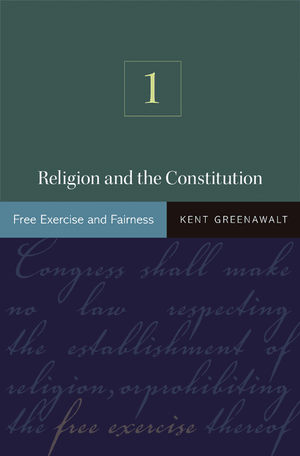 * Kent Greenawalt,
«Παρουσιάζει ιδιαίτερο ενδιαφέρον το γεγονός ότι ευρωπαϊκοί εκκλησιαστικοί κύκλοι, λίγο όψιμα βέβαια, χρησιμοποιούν κάποιες θεωρίες που επιδιώκουν να δείξουν ότι ξεπεράστηκε το μοντέρνο και ότι ήρθε μια «μεταμοντέρνα εποχή», η οποία διευκόλυνε την «επιστροφή» των θρησκευτικών θεσμών. Αλλά στην περίπτωση αυτή αναλύουν την πραγματικότητα όπως θέλουν και επιλεκτικά αποφεύγοντας να κατανοήσουν βασικά δεδομένα της σύγχρονης πραγματικότητας. Είναι χαρακτηριστικό το γεγονός ότι η λεγόμενη «μεταμοντέρνα εποχή» (δεκαετίες '70 και '80) πρόβαλε μεταξύ άλλων τρία βασικά στοιχεία: Το τέλος της αυθεντίας, το δικαίωμα στη διαφορά και εμμέσως τη σπουδαιότητα των θεμελιωδών δικαιωμάτων, συμβάλλοντας έτσι στην εμπέδωσή τους. Αυτά συνήθως τα παραβλέπουν. Με βάση όμως αυτά κάθε λόγος που εκφράζεται στο δημόσιο χώρο δεν μπορεί να επιβληθεί, επειδή ο φορέας εκφοράς του λόγου υποστηρίζει ότι έχει αυθεντία, αλλά μπορεί να συζητηθεί και να γίνει δεκτός επειδή θα δείξει τη λογικότητα και τη χρηστικότητά του. Άρα δεν μπορεί να διεκδικήσει μια apriori αυθεντία. Δεύτερο, οι άνθρωποι διεκδικούν και δεν απεμπολούν το δικαίωμά τους να προσδιορίζουν την προσωπικότητά τους όπως επιθυμούν. Αυτό κατοχυρώνεται μέσα από τα θεμελιώδη δικαιώματα. Γι' αυτό, όχι μόνο η λεγόμενη «μεταμοντέρνα» εποχή ανήκει στο παρελθόν, αλλά και η ίδια δεν κατοχύρωσε τις αξιώσεις των εκκλησιαστικών ή θρησκευτικών φορέων, όπως προσπαθούν να παρουσιάσουν με τον τρόπο που την περιγράφουν. Στην πραγματικότητα ισχύει το ακριβώς αντίθετο. Οι ιδέες του μεταμοντερνισμού συνέβαλαν στην περαιτέρω αμφισβήτηση του ρόλου της αυθεντίας. Καθένας με τις απόψεις του έχει θέση στο δημόσιο χώρο, αλλά δεν μπορεί να τις επιβάλει στους άλλους».
 * Ιωάννης Σ. Πέτρου,
 |
| Jules Arsène Garnier, Le supplice des adultères / Η τιμωρία των μοιχών |
Αγιογραφικές και ιεροκανονικές
τοποθετήσεις περί των προγαμιαίων σχέσεων
(Αρχιεπισκόπου Αθηνών και πάσης Ελλάδος κ.κ. Χριστοδούλου)
«Όλοι γνωρίζουμε τη θεϊκή εντολή «ου μοιχεύσεις», μια από τις 10 εντολές, που απαγορεύει ως αμαρτία τη μοιχεία. Η εντολή αυτή επαναλαμβάνεται και στην Καινή Διαθήκη από τον ίδιο τον Κύριο (Ματθ. 5:27) όσο και τον Απόστολο Παύλο (Β’ Τιμ. 3:1, Εβρ 13:4). Οι πολλοί ερμηνεύουν ως μοιχεία την παράβαση της συζυγικής πίστεως. Δηλαδή, η μοιχεία κατ’ αυτούς προϋποθέτει νόμιμο γάμο και καταπάτηση από τον ένα των συζύγων της συζυγικής πίστεως. Επίσης, ξέρουμε ότι και η πορνεία απαγορεύεται σύμφωνα με την Αγία Γραφή (Α’ Κορ. 5:1, 9· 6:9, 15, 18, Εβρ. 13:4, 21:15). Ως πορνεία δε οι πολλοί θεωρούν τη σεξουαλική επαφή που γίνεται έξω από το γάμο με πόρνες και επί χρήμασι. Σύμφωνα λοιπόν με τις αντιλήψεις αυτές ως αμαρτία θεωρείται α’) η παραβίαση της συζυγικής πίστεως, όταν ο δράστης είναι έγγαμος και β’) η συνουσία που γίνεται εκτός του γάμου και με πληρωμή. Κατά συνέπεια, έξω από τις ρυθμίσεις αυτές, άρα δε και νόμιμες, θεωρείται ότι ευρίσκονται οι σεξουαλικές σχέσεις που γίνονται μεν έξω από το γάμο, αλλά μεταξύ δύο ετερόφυλων ανθρώπων που «αγαπιούνται» και βέβαια δεν προϋποθέτουν καταβολή κάποιου χρηματικού τιμήματος. Είναι έτσι;
Στην Αγία Γραφή οι λέξεις μοιχεία και πορνεία χρησιμοποιούνται ενίοτε αδιακρίτως, π.χ. ο Κύριος μιλώντας για το δικαίωμα εκδόσεως διαζυγίου μεταξύ δύο παντρεμένων προσώπων, ώρισε ως μοναδικό λόγο την πορνεία, εννοώντας βέβαια τη μοιχεία (Ματθ. 5:32). Πάντως, ουδέποτε οι λέξεις μοιχεία και πορνεία σημαίνουν μόνο την επί χρήμασι συνουσία. Ως παράδειγμα φέρω την περίπτωση του αιμομίκτου της Κορίνθου, που συζούσε με την μητρυιά του – ασφαλώς χωρίς να την.. πληρώνει – τον οποίον ψέγει δριμύτατα ο Απόστολος Παύλος (Α’ Κορ. 5:1).
Πουθενά στην Αγία Γραφή δεν δικαιώνονται οι προγαμιαίες σχέσεις εφ’ όσον γίνονται μεταξύ δύο προσώπων που «αγαπιούνται». Και πουθενά στην Αγία Γραφή δεν θα βρούμε αμνήστευση των σχέσεων αυτών επειδή απουσιάζει η πληρωμή και γίνεται επίκληση του ερωτικού αισθήματος. Ας φέρουμε μερικά παραδείγματα:
α’) Η περίπτωση της Σαμαρείτιδος. Έχει τελέσει 5 νομίμους γάμους (επετρέπετο τούτο) και τώρα συζεί με ξένον άνδρα, ασφαλώς διότι «αγαπιούνται». Έχει ωστόσο την συνείδησή της βαρειά, γι’ αυτό και όταν ο Κύριος της λέγει να πάει να φωνάξει τον (νόμιμο) άνδρα της, εκείνη του λέγει «ουκ έχω άνδρα», θέλουσα να κρύψει ότι συζεί παρανόμως με άνδρα που δεν είναι νόμιμος σύζυγός της. Και ο Κύριος την επιβεβαιώνει, λέγοντάς της ότι είπε την αλήθεια, διότι όντως 5 άνδρες ενυμφεύθη και αυτόν που τώρα έχει δεν είναι νόμιμος σύζυγός της. Δηλαδή ο Κύριος αρνείται πως η σχέση αυτή είναι νόμιμη και αποδεκτή.
β’) Το παράδειγμα του Αποστόλου Παύλου. Ο Απ. Παύλος ήτο άγαμος. Γράφει λοιπόν για τους άγαμους άνδρες και τις χήρες γυναίκες, ότι θα προτιμούσε κι αυτοί να παραμείνουν όπως και αυτός δηλ. να μην παντρευθούν. Όμως – συνεχίζει – αν αυτό δεν το μπορούν, ένεκα της ασθενείας της σάρκας, τότε καλόν είναι να παντρευθούν. Δεν τους είπε να... βολευθούν με εξώγαμες σεξουαλικές σχέσεις ευρίσκοντας ο καθένας και η καθεμιά ένα... ταίρι έξω του γάμου.
γ’) Ο ξθ’ Κανών του Μεγ. Βασιλείου. Ο Μ. Βασίλειος θεωρεί ως κώλυμα ιερωσύνης τις προγαμιαίες σχέσεις ενός Αναγνώστου. Του επιβάλλει μάλιστα για την αμαρτίαν του αυτή ενός έτους επιτίμιο. Άρα θεωρεί τις σχέσεις αυτές εκτός του γάμου ως αμαρτίαν αξίαν κατακρίσεως και παιδαγωγικής τιμωρίας.
δ’) Ο δ’ Κανών του Αγ. Γρηγορίου Νύσσης. Ομιλεί για τη διάκριση μεταξύ πορνείας και μοιχείας. Και τις δύο θεωρεί ως αμαρτία. Η διαφορά μεταξύ των είναι ότι εις μεν την πορνείαν δεν γίνεται κάποια αδικία σε βάρος τρίτου, ενώ με τη μοιχεία πλήττεται ο απατώμενος νόμιμος σύζυγος. Καμμιά διάκριση δεν γίνεται με κριτήριο την καταβολή χρημάτων ή την ύπαρξη αισθήματος ερωτικού.
ε’) Ο κε’ Κανών του Μεγ. Βασιλείου. Προβλέπει την περίπτωσιν κάποιου ανδρός που διέφθειρε μία γυναίκα και στη συνέχεια την παντρεύθηκε. Για μεν την σεξουαλική σχέση, αδιάφορα αν έγινε με βιασμό ή με τη θέληση της γυναίκας, τον επιτιμά αυστηρά. Εγκρίνει όμως τη διατήρηση του γάμου. Αν η προ του γάμου σεξουαλική συνάφεια του ζευγαριού ήταν επιτρεπτή, γιατί ο Μ. Βασίλειος επιβάλλει επιτίμιο;
Από τα προηγούμενα γίνεται σαφές ότι οι προγαμιαίες σχέσεις δεν εγκρίνονται από την Αγία Γραφή και την Παράδοση της Εκκλησίας μας. Βέβαια, σήμερα οι αντιλήψεις του κόσμου διαφέρουν. Πολλοί σήμερα εγκρίνουν και θεωρούν φυσιολογικές τις σχέσεις αυτές. Δικαίωμά τους, όπως δικαίωμα και της Εκκλησίας είναι να πει γυμνή την αλήθεια του θείου λόγου. Και ο καθείς ας πράξει κατά συνείδησιν».

«As a translation, the LXX inevitably conveys a different message to the reader than the Hebrew Scriptures would. In some cases there is a great deal of disagreement between these two texts, due in part to ‘actualization’ –an adaptation of the text to events contemporary to the time of the translators.»
«Ως μετάφραση, η Ο' αναπόφευκτα μεταδίδει διαφορετικό μήνυμα στον αναγνώστη απ' ό,τι οι Εβραϊκές Γραφές. Σε κάποιες περιπτώσεις υπάρχει μεγάλος βαθμός ασυμφωνίας μεταξύ των δύο αυτών κειμένων, εν μέρει λόγω της "επικαιροποίησης" –της προσαρμογής του κειμένου στα τρέχοντα γεγονότα της εποχής των μεταφραστών».

«Ένας ιδιαίτερος παράγων που κάνει διστακτικούς πολλούς να ασχοληθούν με θέματα κριτικής του κειμένου είναι η συνύπαρξη δύο κειμένων της Κ.Δ. στον ελληνικό χώρο: της κριτικής έκδοσης (είτε Nestle-Aland είτε The Greek New Testament) στον ακαδημαϊκό χώρο και της Πατριαρχικής έκδοσης του 1904 (με τις ανατυπώσεις από την Αποστολική Διακονία) στη λειτουργική χρήση και την καθημερινή ανάγνωση των πιστών. Η άγνοια ως προς το τι ακριβώς είναι η κριτική έκδοση της Κ.Δ. οδήγησε ορισμένους, θεολόγους μάλιστα, να χαρακτηρίζουν τις κριτικές εκδόσεις ως «Προτεσταντικό» κείμενο, αγνοώντας ότι το κείμενό τους στηρίζεται σε αρχαία χειρόγραφα και ότι τα χειρόγραφα αυτά αποτελούν θησαυρό της Εκκλησίας και μάλιστα της Εκκλησίας των πρώτων αιώνων».


